

As a seasoned supplier of radar level gauges, I've often been asked about the applicability of our products in the marine industry. The marine environment is unique, presenting a set of challenges and requirements that differ significantly from other industrial settings. In this blog, I'll delve into the details of whether radar level gauges can be effectively used in the marine industry, exploring their advantages, limitations, and real - world applications.
The Unique Challenges of the Marine Environment
The marine environment is characterized by several factors that can impact the performance of level measurement devices. Saltwater corrosion is a major concern. The high salt content in seawater can cause rapid deterioration of unprotected metal components, leading to equipment failure over time. Additionally, the constant motion of ships and offshore platforms, due to waves, tides, and vessel maneuvers, creates a dynamic environment. This movement can make it difficult to obtain accurate and stable level measurements.
Another challenge is the presence of harsh weather conditions. Strong winds, heavy rain, and extreme temperatures can all affect the operation of level gauges. For example, heavy rain can interfere with the radar signal, and extreme cold or heat can impact the electronic components of the gauge.
Advantages of Radar Level Gauges in the Marine Industry
Non - Contact Measurement
One of the key advantages of radar level gauges is their non - contact measurement principle. Unlike traditional level measurement methods that require physical contact with the liquid, radar level gauges use electromagnetic waves to measure the distance to the liquid surface. This means that they are not affected by the properties of the liquid, such as corrosiveness, viscosity, or density. In the marine industry, where many of the liquids stored on ships and offshore platforms are corrosive, such as fuel oil and seawater ballast, non - contact measurement is a significant advantage. It reduces the risk of equipment damage and maintenance requirements.
High Accuracy
Radar level gauges are known for their high accuracy. They can provide precise level measurements even in challenging environments. This is crucial in the marine industry, where accurate level measurements are essential for safety and operational efficiency. For example, in fuel storage tanks, accurate level measurement helps to prevent overfilling and under - filling, which can lead to safety hazards and operational disruptions.
Resistance to Harsh Conditions
Modern radar level gauges are designed to withstand harsh environmental conditions. They are often equipped with robust enclosures that protect the electronic components from saltwater corrosion, dust, and moisture. Some radar level gauges are also designed to operate in a wide range of temperatures, making them suitable for use in different marine regions around the world.
Wide Range of Applications
Radar level gauges can be used in a variety of applications in the marine industry. They can be used to measure the level of fuel oil, lubricating oil, freshwater, and seawater ballast in tanks on ships. On offshore platforms, they can be used to monitor the level of crude oil, natural gas condensate, and other fluids in storage tanks.
Types of Radar Level Gauges Suitable for the Marine Industry
Explosion - proof Liquid Level Meter Radar
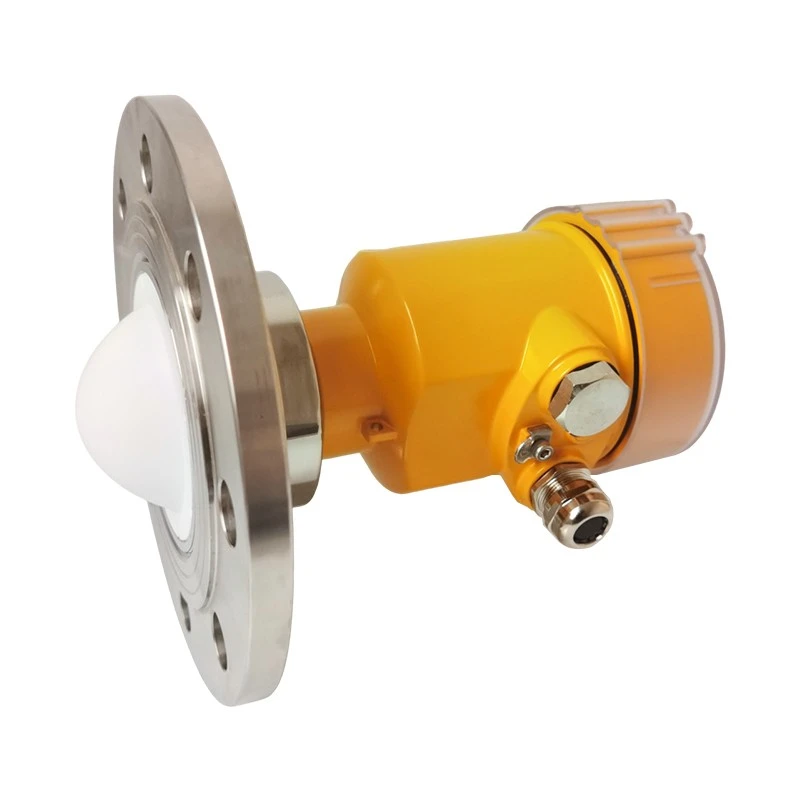
In the marine industry, there are often areas where there is a risk of explosion, such as fuel storage areas on ships and offshore platforms. Explosion - proof Liquid Level Meter Radar is specifically designed to operate safely in these hazardous environments. These gauges are built with explosion - proof enclosures and are certified to meet international safety standards. They can provide reliable level measurements without posing a risk of explosion.
Two - wire Radar Level Gauge
Two - wire Radar Level Gauge is another type of radar level gauge that is well - suited for the marine industry. These gauges are easy to install and require less wiring compared to traditional four - wire gauges. This makes them ideal for use in ships and offshore platforms, where space is often limited and wiring can be a challenge. The two - wire design also reduces the power consumption of the gauge, which is beneficial in a marine environment where power supply may be limited.
4 - 20mA Explosion - proof Liquid Level Meter Radar
4 - 20mA Explosion - proof Liquid Level Meter Radar is a popular choice in the marine industry. The 4 - 20mA output signal is a standard in industrial automation, making it easy to integrate the gauge with other control systems on ships and offshore platforms. The explosion - proof design ensures safe operation in hazardous areas, and the 4 - 20mA signal provides a reliable and accurate way to transmit the level measurement data.
Real - World Applications of Radar Level Gauges in the Marine Industry
Fuel Tank Monitoring
Radar level gauges are widely used for fuel tank monitoring on ships. They can accurately measure the level of fuel oil in the tanks, providing real - time data to the ship's crew. This helps to ensure that the ship has enough fuel for its journey and also allows for efficient fuel management. By monitoring the fuel level, the crew can optimize the fuel consumption and reduce costs.
Ballast Water Management
Ballast water is used to stabilize ships during their voyage. Radar level gauges can be used to monitor the level of ballast water in the ballast tanks. This is important for maintaining the stability of the ship and for complying with international regulations regarding ballast water management. Accurate level measurement helps to ensure that the correct amount of ballast water is taken on and discharged at each port.
Offshore Platform Storage
On offshore platforms, radar level gauges are used to monitor the level of crude oil, natural gas condensate, and other fluids in storage tanks. These gauges provide critical information for the safe and efficient operation of the platform. They help to prevent overfilling and under - filling of the tanks, which can lead to safety hazards and production losses.

Limitations of Radar Level Gauges in the Marine Industry
Despite their many advantages, radar level gauges also have some limitations in the marine industry. As mentioned earlier, heavy rain can interfere with the radar signal, leading to inaccurate measurements. In addition, the presence of foam on the liquid surface can also cause problems. Foam can scatter the radar signal, making it difficult to obtain an accurate measurement of the liquid level.
Another limitation is the high initial cost of radar level gauges compared to some traditional level measurement methods. However, when considering the long - term benefits, such as reduced maintenance requirements and increased accuracy, the cost can be justified.
Conclusion
In conclusion, radar level gauges can be effectively used in the marine industry. Their non - contact measurement principle, high accuracy, and resistance to harsh conditions make them well - suited for a variety of applications on ships and offshore platforms. While they do have some limitations, such as susceptibility to heavy rain and foam, these can often be mitigated through proper installation and maintenance.
If you are in the marine industry and are looking for a reliable level measurement solution, I encourage you to consider our range of radar level gauges. Our products are designed to meet the specific requirements of the marine environment and are backed by our years of experience and technical support. Contact us to start a procurement discussion and find the best radar level gauge solution for your needs.
References
- "Marine Engineering Handbook", various authors, multiple editions
- Technical documentation from radar level gauge manufacturers
- Industry reports on level measurement in the marine industry