

Level gauges are meters used to determine the level of a liquid in a fixed storage or process tank. The gauge is composed of several parts including head, float, measuring tape, bottom anchored bracket, guide wires, elbows, anchors, coupling, pipe support brackets, and pipework. Liquid level gauge calibration is used to ensure proper readings are obtained when using level gauges.

Why choose us
01
Our Product
We offer a range of products, including ultrasonic liquid level meters, electromagnetic flow meters, open channel flow meters, and online water quality analyzers. Our analyzers include online pH meters, dissolved oxygen meters, conductivity meters, turbidity meters, sludge concentration meters, and sludge interface meters. Additionally, we provide pressure transmitters and input level gauges.
02
Product Application
Dongyi is a high-tech company that manufactures industrial instruments. Our products are used in many fields, such as environmental protection, chemical processing, printing and dyeing, pharmaceuticals, water treatment, municipal engineering, and tap water systems.
03
Our Certificates
We hold several certifications, including utility model patents, design patents, software works, and quality management system certifications.
04
Production Equipment
Our production facilities are equipped with advanced tools, including ultrasonic and radar testing devices, laser welding equipment, flow calibration devices, pressure debugging equipment, high and low temperature aging boxes, and circuit aging devices.


Benefits of Level Gauges
Accurate Measurement
One of the main benefits of using a level gauge is its ability to accurately measure the liquid level in tanks. This ensures that levels are sufficient and helps avoid costly issues such as overflow or manufacturing downtime.
Easy Maintenance
Level gauges are designed for easy maintenance and management, making them cost-effective as they require minimal upkeep.
Cost Efficiency
They are more cost-efficient than other liquid-level monitoring methods. Level gauges provide accurate readings at a lower cost, allowing businesses to reduce overhead in the long run.
Easy Installation
These instruments are designed for easy installation in tanks and reservoirs. This makes them ideal for businesses, as they do not require specialist knowledge or skills to set up.
Improved Safety
Installing a level gauge can enhance employee safety by ensuring that measured levels are accurate, thus avoiding potential safety issues.
Long-Lasting
Level gauges are built to last. Businesses can rely on them for precise readings for many years. A reliable gauge can extend the lifespan of equipment and reduce the need for costly repairs or replacements.
Automated System
Most level gauges come with automated systems that can be programmed to send alerts when low or high levels are detected. This eliminates the need for manual checks and reduces the risk of potential issues.
Better Monitoring
With a reliable and accurate level gauge in place, you can monitor levels more accurately and quickly, improving overall operations.
Versatile
These instruments are easy to install and use, making them suitable for various materials and applications.
What Are the Types of Level Gauges and Their Applications?
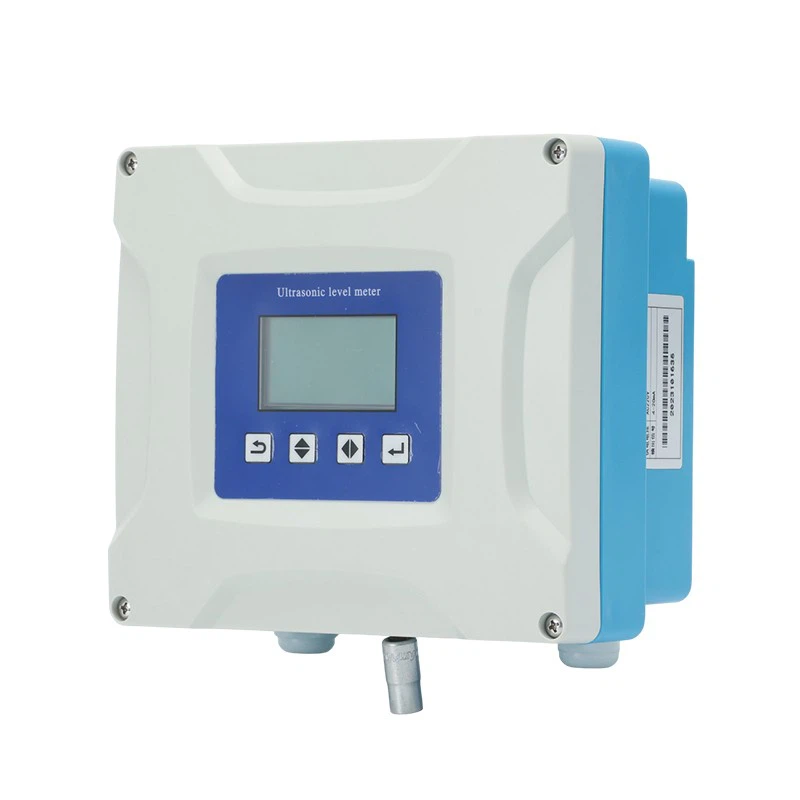


Sight Glass Level Gauges
Principle: Sight glass level gauges consist of a transparent or translucent glass tube or window installed on the side of a tank. The liquid level is visible directly through the sight glass.
Applications: Suitable for applications where direct visual observation of the liquid level is required, such as in small tanks, low-pressure vessels, or applications involving clear, non-hazardous liquids.
Tubular Level Gauges
Principle: Tubular level gauges consist of a transparent or reflex glass tube mounted vertically on the side of a tank. The liquid level inside the tube corresponds to the liquid level in the tank.
Applications: Widely used in boilers, pressure vessels, and steam applications where high temperatures, pressures, or corrosive liquids are present.
Magnetic Level Gauges
Principle: Magnetic level gauges use a magnetic float inside the tank that rises and falls with the liquid level. External magnetic flags or indicators on the outside of the gauge move in response to the float position, providing a visual indication of the liquid level.
Applications: Suitable for high temperatures, pressures, or corrosive liquids, such as in chemical processing, oil and gas, and power generation.
Float Level Switches
Principle: Float level switches consist of a buoyant float connected to a switch mechanism. When the liquid level reaches a predetermined point, the float triggers the switch, signaling the presence or absence of the liquid at that level.
Applications: Used for point level detection in tanks, vessels, and sumps across various industries, including water treatment, wastewater management, and industrial automation.
Displacer Level Switches
Principle: Displacer level switches use a displacer or buoyant element suspended from a spring. As the liquid level changes, the displacer moves, causing the spring to stretch or compress. The change in spring tension actuates a switch mechanism.
Applications: Suitable for high-temperature, high-pressure applications and for detecting interface levels or specific gravity changes in liquids, such as oil-water interfaces in separators or interface control in storage tanks.
Ultrasonic Level Sensors
Principle: Ultrasonic level sensors emit high-frequency sound waves that bounce off the liquid surface and are then detected by the sensor. The time it takes for the sound waves to return is used to calculate the liquid level.
Applications: Suitable for non-contact level measurement in tanks, vessels, and open channels in various industries, including water and wastewater management, chemical processing, and food and beverage.
Radar Level Sensors
Principle: Radar level sensors emit microwave signals directed toward the liquid surface. The time it takes for the signals to reflect off the surface and return to the sensor is measured to determine the liquid level.
Applications: Suitable for non-contact level measurement in tanks, vessels, and silos with harsh environmental conditions, such as high temperatures, pressures, or vapor. Commonly used in industries like oil and gas, petrochemicals, and mining.
What does a liquid level gauge consist of?
A typical liquid level gauge comprises several key components, each contributing to its functionality and reliability:
Body
The main housing of the gauge, typically made of durable materials such as stainless steel or glass-reinforced plastic, provides structural support and protection for internal components.
Indicator
This component visually displays the liquid level, often through a transparent or translucent section of the gauge body. Indicators may feature graduated markings or digital displays for precise measurement.
Float
In float-operated gauges, a buoyant float follows the liquid surface, transmitting the level information to the indicator through mechanical linkages or magnetic coupling.
Wetted Components
These are the parts of the gauge that come in direct contact with the liquid being measured. They must be compatible with the chemical properties of the fluid to ensure accurate and reliable measurements.
Valves and Fittings
To facilitate installation, maintenance, and safety, liquid level gauges may incorporate valves, fittings, and sealing mechanisms.
Mounting Hardware
Depending on the application, liquid level gauges can be mounted vertically, horizontally, or at specific angles using brackets, flanges, or other mounting hardware.
Types of Level Gauges
Different types of level gauges are designed for various applications and exhibit a range of characteristics. Common types of level gauges include:
Reflex Level Gauges
Reflex level gauges operate based on the principles of legislation and reasonable rules. They use reflex glass prisms, typically located in the corner of a section, to indicate liquid levels. The lower part of the gauge is filled with liquid, while the upper part contains gas or vapor.
In these gauges, the liquid level can be observed in the steam/glass area. Reflex level gauges do not require special lighting and can be read during the day.
Liquid Zone
When viewing the gauge, the area outside the glass appears dark, indicating that light does not pass through. Light rays are angled at 45 degrees to strike the glass/liquid interface. The critical angle for the glass or fluid is ideally up to 45°.
The rays cannot be seen from outside because they do not reflect off the walls of the gauge’s interior cavity when they strike at angles below the critical angle. As a result, this zone appears completely dark.
Gas/Vapor Zone
This zone appears bright silver to the observer. Light waves traveling toward the glass at the gas-vapor contact in the liquid zone also strike at an angle of approximately 45°.
Because this angle exceeds the critical angle for glass/gas-vapor, the rays make a 90° turn and return at a 45° angle toward the glass/gas-vapor interface. They reflect and are directed 90 degrees toward the viewer, creating a silvery glow.
Transparent Level Gauges
Transparent level gauges consist of two plates of clear glass. Due to the differing transparency of the two media, the liquid level is clearly visible.
To protect the surfaces from the full force of the liquid, transparent level gauges can be equipped with mica shields. It is advisable to use these shields in applications where high temperatures may be present.
Bi-Color Level Gauges
Bi-color level gauges are used in boilers to measure liquid levels. These gauges are made of premium mica sheets to protect against wet steam produced in a boiler drum. The level is determined by comparing the refractive indices of vapor and water.
Bi-color level gauges resemble transparent level gauges but have a liquid chamber in a wedge-shaped section. The device features two color filters—one red and one green—positioned in an illuminator at the back. When light rays hit the liquid, red light is absorbed and deflected to one side. The steam passes through and appears red under the same light. The reverse occurs with green filters. Users can easily determine the state of each medium in the system.
Magnetic Level Gauges
Magnetic level gauges use an electromagnetic field to regulate fluids. Any object placed in a liquid can alter its weight. These gauges are useful for applications where glass gauges may break or become damaged. They are suitable for use underground and can handle high operational temperatures and pressures. Additionally, these gauges can detect interface levels even in extremely toxic or corrosive media.
Parameters for Level Gauge Sizing and Selection
The main parameters that affect the level gauge selection and sizing are:
Properties of liquid
Predicting the Properties such as density (specific gravity), viscosity, conductivity, dielectric constant, etc are absolutely critical for the selection of instruments. These properties are responsible for the proper functioning and accuracy of the equipment.
01
Condition of the liquid
The liquid condition like foaming, frothing, Emulsion, sand, Wax, scaling, etc must be accurately specified to select the required accessories to reduce the effect on the Instrument.
02
Nature of the Liquid
The nature of liquids like corrosive, non-corrosive, and hazardous depends on their properties and uses to study the compatibility of the material of construction of the level measurement system.
03
Accurate prediction of vapor space
This is required since vapors can disrupt the functioning of sensors, build pressure, and in turn result in incorrect readings.
04
Operating conditions
Various operating parameters like temperature and pressure conditions to which the liquids are subjected must be specified. Level-measuring instruments have minimum and maximum limits for these parameters. Considering these limits help to select the Instrument which will withstand them.
05

Proper installation is essential to ensure accurate readings from a level gauge. Here are some tips for installing a level gauge:
Choose the Right Type of Level Gauge for Your Application:
The choice of level gauge will depend on the type of liquid being measured, as well as the temperature, pressure conditions, and accuracy requirements.
Position the Gauge for Easy Reading:
The level gauge should be positioned at eye level and in a location where it can be easily read by operators.
Ensure the Gauge is Level and Plumb:
The level gauge should be installed level and plumb to ensure accurate readings. Any tilt or misalignment can affect the measurements.
Install Isolation Valves for Maintenance and Repair:
Isolation valves should be installed on both the inlet and outlet sides of the level gauge to facilitate maintenance and repair.
Install a Drain Valve to Remove Condensation or Liquid Buildup:
A drain valve should be installed at the bottom of the level gauge to remove any condensation or liquid buildup.
Maintenance of a Level Gauge
Regular maintenance is necessary to ensure that a level gauge continues to provide accurate readings. Here are some tips for maintaining a level gauge:
Clean the Gauge Regularly:
The level gauge should be cleaned regularly to remove any dirt, buildup, or debris that can affect the readings.
Check for Leaks and Repair Damaged Components:
The level gauge should be checked for leaks, and any damaged components should be repaired or replaced immediately.
Replace Worn or Damaged Seals or Gaskets:
The seals and gaskets on the level gauge should be inspected regularly and replaced if they are worn or damaged.
Check the Calibration of the Gauge Regularly:
The calibration of the level gauge should be checked regularly to ensure that it is providing accurate readings.

Accuracy of a Level Gauge
The accuracy of a level gauge is critical for safety, process control, and inventory management. Regular calibration is necessary to ensure accurate readings. Here are some tips for maintaining the accuracy of a level gauge:
Follow the Manufacturer's Recommended Calibration Procedure:
The level gauge should be calibrated according to the manufacturer's recommended procedure to ensure accurate readings.
Use a Reference Standard for Calibration:
A reference standard should be used to calibrate the level gauge to ensure accuracy.
Calibrate the Gauge at Regular Intervals:
The level gauge should be calibrated at regular intervals to maintain accuracy.
Check the Accuracy After Maintenance or Repair Work:
After any maintenance or repair work is performed on the level gauge, its accuracy should be verified to ensure that it is providing accurate readings.
Our Factory
Zhejiang Dongyi Technology Co., Ltd. was formerly known as Hangzhou Tuosheng Automation Instrument Co., Ltd. "TUOSHENG" was founded in 2010. It has been deeply involved in the industrial instrument industry for more than ten years and has profound technical accumulation. Dongyi Company was built by the original team of "Tuosheng" and its headquarters is located in the beautiful paradise on earth - Hangzhou, Zhejiang. In 2023, the company began to prepare for international cross-border business, and registered and established Hangzhou Dongyi Import and Export Co., Ltd. in 2024 to enter the international market.


FAQ
We're well-known as one of the leading level gauge manufacturers and suppliers in China. Please feel free to buy high quality level gauge made in China here from our factory. Contact us for customized service.