

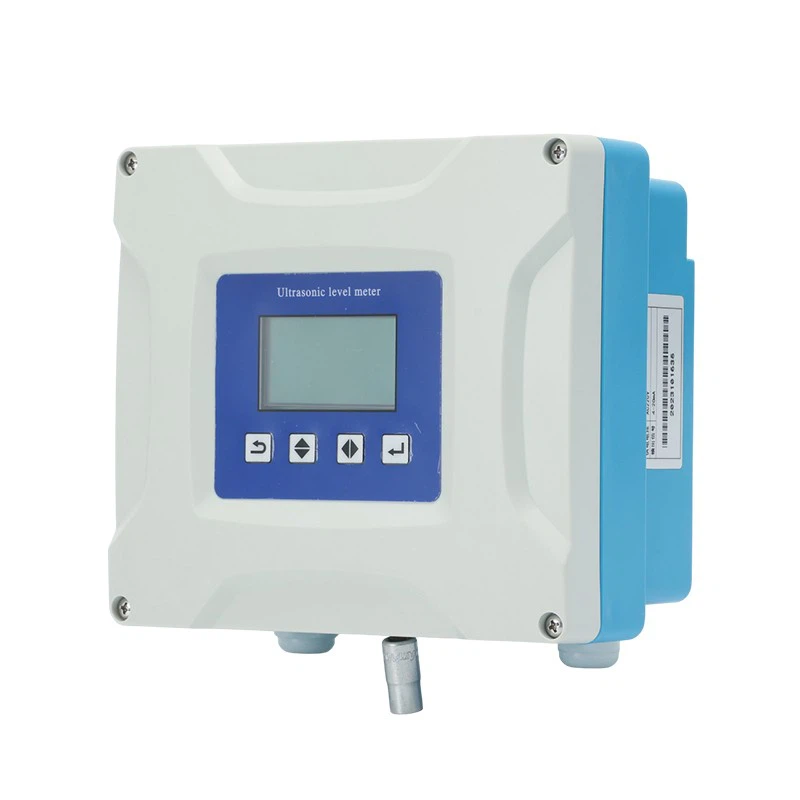
Ultrasonic Level Gauge are sensors that utilize the characteristics of ultrasonic wave propagation to calculate the liquid level height by measuring the time it takes for the emitted ultrasonic pulse to be reflected back from the liquid surface.

Why choose us
01
Our Product
We offer a range of products, including ultrasonic liquid level meters, electromagnetic flow meters, open channel flow meters, and online water quality analyzers. Our analyzers include online pH meters, dissolved oxygen meters, conductivity meters, turbidity meters, sludge concentration meters, and sludge interface meters. Additionally, we provide pressure transmitters and input level gauges.
02
Product Application
Dongyi is a high-tech company that manufactures industrial instruments. Our products are used in many fields, such as environmental protection, chemical processing, printing and dyeing, pharmaceuticals, water treatment, municipal engineering, and tap water systems.
03
Our Certificates
We hold several certifications, including utility model patents, design patents, software works, and quality management system certifications.
04
Production Equipment
Our production facilities are equipped with advanced tools, including ultrasonic and radar testing devices, laser welding equipment, flow calibration devices, pressure debugging equipment, high and low temperature aging boxes, and circuit aging devices.


Benefits of Ultrasonic Level Gauge
Non-contact measurement
Ultrasonic sensors do not require contact with the target material, which helps prevent contamination and wear-and-tear on the sensor. This non-invasive nature makes them ideal for use with corrosive, viscous, or abrasive materials.
Accurate and reliable
Ultrasonic level sensors provide high accuracy and repeatability, even in challenging environments with turbulence, foam, or vapor. Advanced signal processing techniques and temperature compensation help to ensure consistent, reliable measurements.
Easy installation and maintenance
These sensors can be easily installed on the exterior of a tank or container without the need for drilling or modifications. Furthermore, the lack of moving parts reduces the need for regular maintenance and lowers the overall cost of ownership.
Versatility
Ultrasonic level sensors can be used with various materials, including liquids, solids, and granular materials. They can also be easily configured to work in a wide range of applications and industries.
Ultrasonic Level Gauge Working Principle
The basic working principle involves transmitting a short pulse of ultrasonic sound from the sensor and measuring the time it takes for the sound wave to travel to the target and back. This time-of-flight is then used to calculate the distance.
Here is the step-by-step process:
1.A pulse transmitter stimulates an ultrasonic air transducer (a device that converts electrical energy into mechanical vibrations and vice versa), generating a sound wave.
2.The wave propagates through the air to the surface of the target and then reflects back toward the sensor.
3.The reflected wave is received by the same transducer in the receiver mode and converted into an electrical signal.
4.The electrical signal is amplified and processed to find the reflected echo.
5.The sensor captures the difference in time between the emitted and received echo.
6.The distance to the target is calculated using the speed of sound, a known variable, and the round-trip time, as shown in the following equation.
How to Use an Ultrasonic Level Gauge


Mounting the Ultrasonic Sensor: Mount the ultrasonic sensor on a liquid or solid vessel. The mounting location should be free from obstructions, vibrations, and other factors that may affect the measurement. Ensure that the position of the transducer is accessible for ultrasonic emission and reception and is not obstructed by the medium.
Power Supply Connection: Connect the ultrasonic level transmitter to the power supply. Typically, ultrasonic level transmitters use a DC power supply, so ensure that the correct supply voltage is provided.
Signal Connection: This is usually done via a 4-20 mA current signal or another standard industrial communication protocol.
Setting Operating Parameters: Configure the operating parameters of the ultrasonic level transmitter according to the specific application requirements.
Avoid Interference: Consider and avoid factors that may interfere with measurement results, such as high winds, strong vibrations, temperature changes, etc.
Test and Calibration: Test and calibrate the device before formal operation. Verify the performance and accuracy of the ultrasonic level transmitter by simulating or measuring actual level changes.
Monitoring and Maintenance: Regularly monitor the performance of the ultrasonic level transmitter to ensure it remains stable and reliable. If abnormalities are found, recalibration or maintenance may be required.
Safety Precautions: Follow safety regulations and instructions to ensure the safe use of the ultrasonic level transmitter. For example, avoid direct exposure to ultrasonic radiation.
Typical Ultrasonic Level Gauge Applications
Liquid Level Measurement in Sewage Treatment Plants:
The composition of sewage is complex and corrosive, and floating objects can easily form on the liquid surface. Therefore, the liquid level meter must be sensitive and reliable. Ultrasonic waves have strong signal penetration and sensitive response, making them the recommended choice for sewage level measurement.
Chemical Tank Liquid Level Monitoring:
Chemical tanks come in various sizes. High-frequency ultrasonic level meters can measure up to 40 meters. The entire output system is equipped with 4-20 mA and RS485 communication as standard, making them resistant to stirring, foam, and floating objects.
River, Channel, and Reservoir Water Level Monitoring:
Ultrasonic level sensors can monitor water level changes in reservoirs, dams, rivers, channels, and other water bodies in real time. This capability helps the water conservancy department understand water levels promptly and predict floods, providing accurate data for reservoir scheduling and flood control decisions.
Liquid Level Measurement in Automated Production Lines:
Ultrasonic level sensors can measure liquids and be configured as liquid level switches. While monitoring the real-time liquid level, they can control high and low liquid levels, effectively replacing other types of liquid level control.
Lake, River, and Shallow Water Level Measurement:
Utilizing ultrasonic level sensor technology, our portable ultrasonic depth sounder is a powerful tool. It integrates an ultrasonic transceiver sensor, service circuit, temperature compensation sensor, display, control signal output, and optional serial data or analog output unit.
This instrument is ideal for hydrographic surveys, hydropower plants, reservoir areas, shallow seas, lakes, river surveys, and environmental water monitoring.
Sludge Level Measurement:
The ultrasonic sludge interface meter uses reliable ultrasonic echo detection principles to achieve real-time detection of sludge thickness. It employs ultrasonic emission and echo analysis of suspended solids in water to determine the height of the sludge layer, providing reliable data for process control. This optimizes processes such as mud discharge and dosing and is used for sludge level measurement in primary sedimentation tanks, secondary sedimentation tanks, concentration tanks, and water plant sedimentation tanks in sewage treatment plants.
Diesel Tank Level Measurement:
Explosion-proof ultrasonic liquid level sensors can be used in diesel storage tanks and other liquid level measurements that require explosion-proof features. These meters can work with volume recorders to monitor tank volume.
Fire Cylinder Liquid Level Measurement:
A portable ultrasonic liquid level indicator developed using ultrasonic sensor technology can detect CO2 cylinders and indicate levels of pure liquid, emulsion liquid, and suspended liquid.
Material Level Measurement:
The ultrasonic level meter sensor is installed above the silo and liquid tank, not directly contacting the material. This design overcomes the shortcomings associated with other types of liquid (material) level meters that do make direct contact.
Considerations for Selecting Ultrasonic Level Gauge
Components of an Ultrasonic Level Gauge
An ultrasonic level sensor comprises several essential components that work together to measure liquid levels accurately. The main components include the transducer, signal processor, display module, and power supply.
The transducer is the heart of the ultrasonic level sensor, responsible for emitting and receiving sound waves. It consists of a piezoelectric crystal that vibrates at high frequencies when an electrical signal is applied. These vibrations generate ultrasonic waves that propagate through the air and are reflected by the liquid surface.
The signal processor is another critical component, which is responsible for processing the electrical signals from the transducer. It measures the time-of-flight of the sound waves and calculates the liquid level based on this information. The signal processor may also have additional features, such as temperature compensation and signal filtering, to enhance accuracy and performance.
In some ultrasonic level sensors, a display module is included to provide real-time level readings to users. This module may consist of a digital display or analog output, allowing operators to monitor the liquid level directly from the sensor. The display module can also include other features, such as alarms and communication interfaces, to enhance the functionality of the sensor.
The power supply is essential for providing electrical energy to the ultrasonic level sensor. Most sensors operate on low-voltage DC power, which can be supplied by batteries, solar panels, or external power sources. The power supply must be stable and reliable to ensure consistent operation of the sensor.
Our Factory
Zhejiang Dongyi Technology Co., Ltd. was formerly known as Hangzhou Tuosheng Automation Instrument Co., Ltd. "TUOSHENG" was founded in 2010. It has been deeply involved in the industrial instrument industry for more than ten years and has profound technical accumulation. Dongyi Company was built by the original team of "Tuosheng" and its headquarters is located in the beautiful paradise on earth - Hangzhou, Zhejiang. In 2023, the company began to prepare for international cross-border business, and registered and established Hangzhou Dongyi Import and Export Co., Ltd. in 2024 to enter the international market.


FAQ
We're well-known as one of the leading ultrasonic level gauge manufacturers and suppliers in China. Please feel free to buy high quality ultrasonic level gauge made in China here from our factory. Contact us for customized service.
level gauge, , Anti corrosion Ultrasonic Liquid Level Gauge