

A pressure transmitter is a device capable of measuring applied pressure. The pressure transmitter converts physical pressure into an electrical signal. A pressure transmitter, often referred to as a pressure transducer or transmitter, is a device used to measure and convert mechanical or hydraulic pressure into an electrical signal.

Why choose us
01
Our Product
We offer a range of products, including ultrasonic liquid level meters, electromagnetic flow meters, open channel flow meters, and online water quality analyzers. Our analyzers include online pH meters, dissolved oxygen meters, conductivity meters, turbidity meters, sludge concentration meters, and sludge interface meters. Additionally, we provide pressure transmitters and input level gauges.
02
Product Application
Dongyi is a high-tech company that manufactures industrial instruments. Our products are used in many fields, such as environmental protection, chemical processing, printing and dyeing, pharmaceuticals, water treatment, municipal engineering, and tap water systems.
03
Our Certificates
We hold several certifications, including utility model patents, design patents, software works, and quality management system certifications.
04
Production Equipment
Our production facilities are equipped with advanced tools, including ultrasonic and radar testing devices, laser welding equipment, flow calibration devices, pressure debugging equipment, high and low temperature aging boxes, and circuit aging devices.


Benefits of Pressure Transmitters
Improved Process Control
Accurate and reliable pressure measurements are essential for maintaining proper process control in industrial applications. Pressure sensors help ensure that processes run at optimal efficiency, reducing waste and improving product quality. These sensors are designed to provide precise and consistent measurements, even in challenging environments. This allows businesses to make informed decisions based on the most accurate data possible, leading to better process control and increased efficiency.
Increased Safety
In many industrial applications, pressure can pose a safety hazard if not properly controlled. Pressure sensors help ensure that pressure levels remain within safe limits, reducing the risk of accidents or equipment failure. They are designed to withstand harsh conditions and provide reliable performance, minimizing the risk of downtime or safety hazards. These sensors are calibrated for precise measurements, ensuring businesses can maintain safe operating conditions.
Reduced Maintenance Costs
Inaccurate or unreliable pressure measurements can lead to unnecessary maintenance or repairs, increasing costs and downtime. Pressure sensors reduce maintenance costs by providing accurate and consistent measurements, decreasing the need for frequent replacements or repairs. They are built for long-lasting performance, crafted from high-quality materials that withstand harsh conditions, ensuring businesses can rely on them for years to come.
Improved Product Quality
Accurate pressure measurements can enhance product quality by ensuring that processes run at optimal efficiency. This leads to reduced waste and increased yield, resulting in higher-quality products and increased profitability.
Principles of different types of pressure transmitters
The principle of capacitive pressure transmitter
When the pressure directly acts on the surface of the measuring diaphragm, the diaphragm produces a small deformation. The high-precision circuit on the measuring diaphragm transforms this small deformation into a highly linear voltage proportional to the pressure and proportional to the excitation voltage. Signal, and then use a dedicated chip to convert this voltage signal into an industry standard 4-20mA current signal or 1-5V voltage signal.
The principle of diffused silicon pressure transmitter
The pressure of the measured medium directly acts on the diaphragm of the sensor (usually a 316L diaphragm), causing the diaphragm to produce a micro displacement proportional to the pressure of the medium, changing the resistance value of the sensor, and detecting it with a Wheatstone circuit This change, and convert and output a standard measurement signal corresponding to this pressure.
Principle of monocrystalline silicon pressure transmitter
Piezoresistive pressure sensors are constructed using the piezoresistive effect of single crystal silicon. Single crystal silicon wafer is used as the elastic element. When the pressure changes, the single crystal silicon produces strain, so that the strain resistance directly diffused on it produces a change proportional to the measured pressure, and then the corresponding voltage output signal is obtained by the bridge circuit .
Principle of ceramic pressure transmitter
The pressure directly acts on the front surface of the ceramic diaphragm, causing a slight deformation of the diaphragm. The thick film resistor is printed on the back of the ceramic diaphragm and connected to a Wheatstone bridge (closed bridge) due to the piezoresistive effect of the varistor, The bridge generates a highly linear voltage signal proportional to the pressure and proportional to the excitation voltage. Generally used for pressure measurement of air compressors, more ceramics are used.
Principle of strain gauge pressure transmitter
The most commonly used strain gauge pressure transmitters are metal resistance strain gauges and semiconductor strain gauges. Metal resistance strain gauge is a kind of sensitive device that converts the strain change on the test piece into an electric signal. There are two kinds of wire strain gauge and metal foil strain gauge. Usually the strain gauge is tightly bonded to the mechanical strain matrix through a special adhesive. When the matrix is subjected to a stress change, the resistance strain gauge also deforms, so that the resistance value of the strain gauge changes, so that The voltage applied to the resistor changes. Strain gauge pressure transmitters are relatively rare on the market.
Sapphire pressure transmitter
The sapphire pressure transmitter uses the strain resistance working principle, adopts high-precision silicon-sapphire sensitive components, and converts the pressure signal into a standard electrical signal through a dedicated amplifier circuit.
Sputtering film pressure transmitter
The sputtering pressure sensitive element is manufactured by microelectronics technology, forming a firm and stable Wheatstone bridge on the surface of the elastic stainless steel diaphragm. When the pressure of the measured medium acts on the elastic stainless steel diaphragm, the Wheatstone bridge on the other side produces an electrical output signal proportional to the pressure. Due to its good impact resistance, sputtered films are often used in occasions with frequent pressure impacts, such as hydraulic equipment.
The Electrical Output of Pressure Transducers


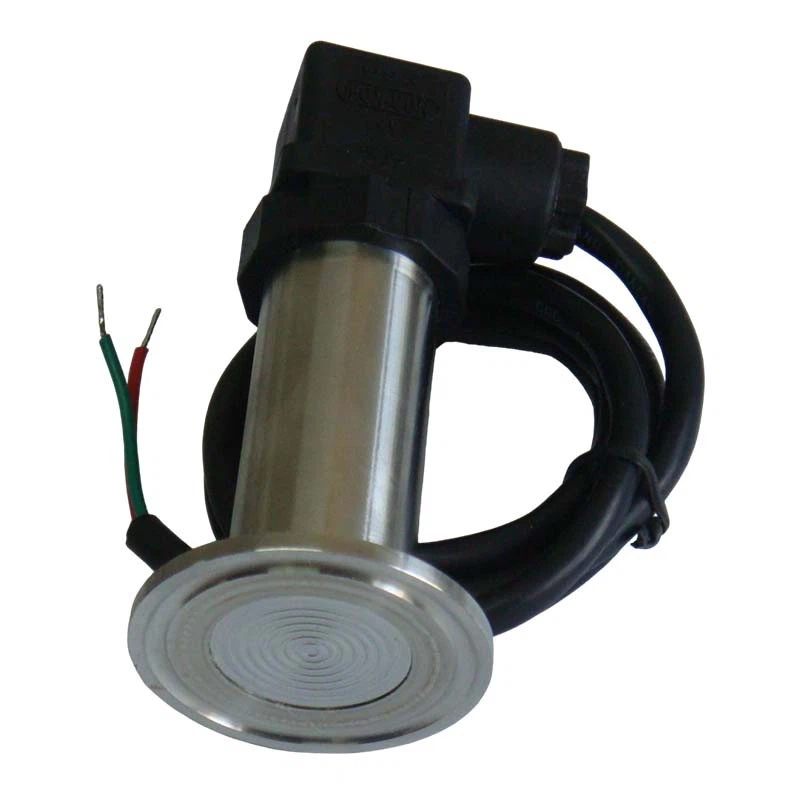
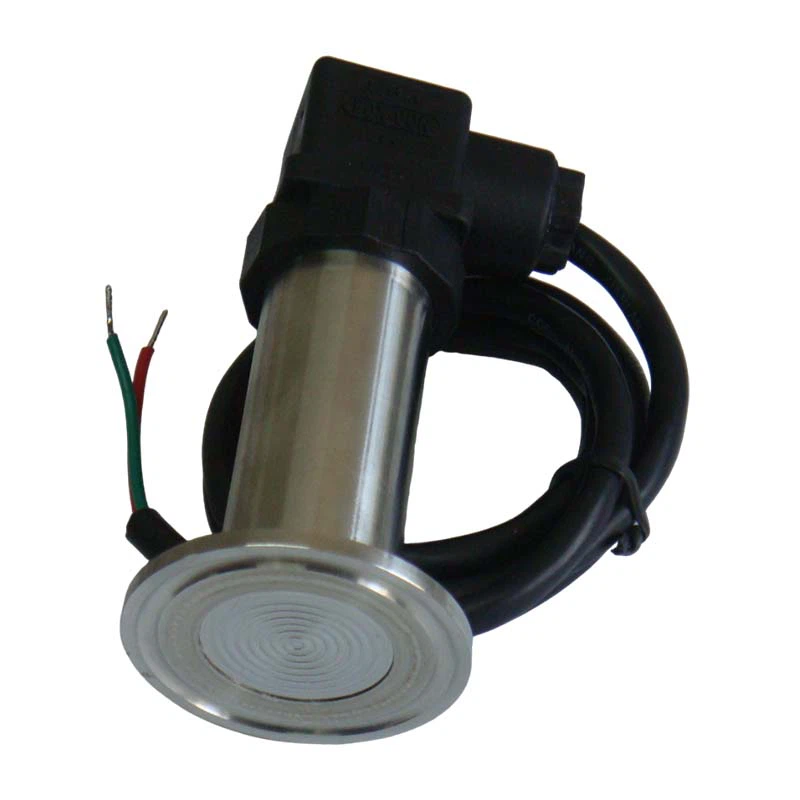
Pressure transducers are generally available with three types of electrical output: millivolt, amplified voltage, and 4-20mA. Below is a summary of the outputs and when they are best used.
Millivot Output Pressure Transducers
Transducers with millivolt output are normally the most economical pressure transducers. The output of a millivolt transducer is nominally around 30mV. The actual output is directly proportional to the pressure transducer input power or excitation. If the excitation fluctuates, the output will change also. Because of this dependence on the excitation level, regulated power supplies are suggested for use with millivot transducers. Since the output signal is so low, the transducer should not be located in an electrically noisy environment. The distances between the transducer and the readout instrument should also be kept relatively short.
Voltage Output Pressure Transducers
Voltage output transducers include integral signal conditioning which provide a much higher output than a millivolt transducer. The output is normally 0-5Vdc or 0-10Vdc. Although model specific, the output of the transducer is not normally a direct function of excitation. This means unregulated power supplies are often sufficient as long as they all within a specified power range. Because they have a higher level output, these transducers are not as susceptible to electrical noise as millivolt transducers and can therefore be used in much more industiral environments.
Current Output Pressure Transducers
These types of transducers are also known as pressure transmitters. Since a 4-20mA signal is least affected by electrical noise and resistance in the signal wires, these transducers are best used when the signal must be transmitted long distances. Pressure transducers are generally available with three types of electrical output; millivolt, amplified voltage and 4-20mA. In this article how to wire different types of pressure transducers based on its output is explained.
Millivolt Output Pressure Transducers
Transducers with millivolt output are normally the most economical pressure transducers. The output of the millivolt transducer is nominally around 30mV. The actual output is directly proportional to the pressure transducer input power or excitation.
If the excitation fluctuates, the output will change also. Because of this dependence on the excitation level, regulated power supplies are suggested for use with millivolt transducers. Because the output signal is so low, the transducer should not be located in an electrically noisy environment.
The distances between the transducer and the readout instrument should also be kept relatively short.
Voltage Output Pressure Transducers
Voltage output transducers include integral signal conditioning which provide a much higher output than a millivolt transducer. The output is normally 0-5Vdc or 0-10Vdc.
Although model specific, the output of the transducer is not normally a direct function of excitation. This means unregulated power supplies are often sufficient as long as they fall within a specified power range.
Because they have a higher level output these transducers are not as susceptible to electrical noise as millivolt transducers and can therefore be used in much more industrial environments.
4-20 mA Output Pressure Transducers
These types of transducers are also known as pressure transmitters. Since a 4-20mA signal is least affected by electrical noise and resistance in the signal wires, these transducers are best used when the signal must be transmitted long distances.
How do Pressure Transmitters Work?
Pressure transmitters operate through a series of well-defined steps:
Sensing Pressure Changes
When pressure is applied to the diaphragm, it undergoes displacement. This deformation is detected by the sensor element, generating a proportional electrical signal.
Signal Conversion
The electrical signal from the sensor element is then processed and converted into an output signal that corresponds to the pressure being measured. This signal can be in analog or digital format.

While the terms are often used interchangeably, there are some key differences:
Output signal: Pressure transducers typically provide a non-amplified voltage output, while pressure transmitters offer an amplified signal, usually in voltage or current (e.g., 4-20mA).
Power consumption: Transducers generally require less energy and have lower power consumption, making them suitable for battery-powered applications.
Signal processing: Transmitters include additional circuitry for temperature compensation and amplification.
Noise immunity: Current output from transmitters is more resistant to electrical interference, especially over longer distances.
Calibration: Many transmitters offer various calibration options, including turndown and zero/span adjustments.
Components of a Pressure Transmitter
A pressure transmitter typically consists of several key components that work together to measure pressure and convert it into an electrical signal. The main components include:
Pressure Sensor: The core component of the transmitter, the pressure sensor detects the pressure applied to it and converts it into a mechanical signal. This sensor can be based on various technologies, such as strain gauge, piezoelectric, capacitive, or resonant silicon.
Diaphragm: A thin, flexible membrane that moves in response to changes in pressure. The diaphragm is an essential part of the pressure sensor, as the movement caused by pressure changes is what gets converted into an electrical signal. It can be made from materials like stainless steel, Hastelloy, Monel, Tantalum, or others, depending on the application’s requirements for chemical compatibility and durability.
Seal: Seals protect the internal components of the transmitter, especially the pressure sensor, from the process medium (the fluid whose pressure is being measured). Seals must be compatible with the process medium to prevent corrosion or degradation.
Process Connection: This component allows the pressure transmitter to be connected to the process system where pressure measurement is required. Common process connections include threaded connections (NPT, BSP), flange connections, and sanitary connections, among others.
Electrical Connection: The electrical connection is the part of the transmitter where the electrical signal is outputted. It can vary in type, including terminal blocks, cable glands, or connectors, and is used to connect the transmitter to the control system or display unit.
Housing: The housing encases the internal components of the transmitter, providing protection against environmental conditions such as dust, moisture, and potential hazards of the specific industrial environment in which it is installed. Housings are typically made from durable materials like aluminum or stainless steel and are designed to meet specific standards for explosion-proof or intrinsically safe applications.
Transducer (or Transmitter Circuitry): The transducer converts the mechanical signal from the pressure sensor into an electrical signal. This component often includes signal conditioning circuitry to amplify, filter, and convert the signal into a standard output format, such as 4-20 mA, 0-10V, or a digital signal like HART, Foundation Fieldbus, or Profibus.
Display and User Interface (optional): Some pressure transmitters come equipped with a local display and user interface, such as buttons or a touchscreen, allowing for on-site monitoring of pressure readings and configuration of the transmitter settings.
Key Factors to Consider When Selecting a Pressure Transmitter
Pressure Range
The first factor to consider is the pressure sensor range of the pressure measurement instrument. The pressure range defines the limits of how much pressure can be measured or monitored in an application. Essential to the pressure range specification are the lower and upper limits of the pressure range, and whether the range is for absolute pressure or gauge pressure. The accuracy data specified in the data sheet applies within the defined pressure range.
Pressure Connection
The second factor to consider is the pressure connection, also referred to as the process connection. The pressure connection directs the pressure medium to the pressure sensor. Almost all pressure connections have a standard thread and can be installed at the pressure measurement point.
Internal vs. Flush Diaphragms
Another consideration is the choice between internal diaphragms and flush diaphragms. There is a difference between pressure connections with an internal diaphragm and those with a flush (flat) non-clogging diaphragm. In process connections with an internal diaphragm, the pressure medium directly contacts the pressure sensor diaphragm through the pressure port. In process connections with a flush diaphragm, the pressure port is sealed using an additional stainless-steel diaphragm. A transmission fluid transmits the pressure from the flat external diaphragm to the internal sensor diaphragm.
Threads & Seals
Threads and seals provide a multitude of options. To enable the simultaneous installation and sealing of the measurement instrument at the measurement point, the pressure connections are usually designed with a thread. Different threads are commonly used worldwide, and both male and female threads are available. Sealing methods vary widely, with some threads, including tapered threads, being self-sealing. Other threads require an additional seal, gasket, or o-ring. There are various application-specific and regional solutions for this. The most common sealing methods for parallel threads are sealing behind the thread (i.e., between the thread and the case) or sealing in front of the thread using a metal sealing ring.
Electrical Connection
The electrical connection of an electronic pressure transmitter also presents multiple options: a standard plug-in connector or an integral cable. The nature of the connection significantly influences the IP (Ingress Protection) rating of the instrument and often limits the permissible ambient temperature range and the instrument's resistance to aggressive media or environmental influences (e.g., UV radiation).
Output Signals of Pressure Transmitters
Output signals from electronic pressure transmitter measurement instruments are generally an analog voltage or current signal, which is transmitted to a control unit connected downstream of the instrument. However, pressure measurement instruments are also available with digital outputs. With the exception of switching output signals, which are already in a digital format, the output signal should be linear and proportional to the applied pressure.
Standard Analog Output Signal
Other output signals include standard analog output, ratiometric output, and digital output. The most common output signal in pressure measurement technology is the analog output signal. Commonly used signals include the current signal of 4-20 mA and voltage signals of 0-5 V, 0-10 V, and 1-5 V. In comparison to voltage signals, the advantages of current signals include much lower sensitivity to electromagnetic interference and automatic compensation for resistive loads in the current loop. The elevated zero point of the 4-20 mA current signal, as well as the 1-5 V voltage signal, also allows for cable break detection separately from instrument faults.
Our Factory
Zhejiang Dongyi Technology Co., Ltd. was formerly known as Hangzhou Tuosheng Automation Instrument Co., Ltd. "TUOSHENG" was founded in 2010. It has been deeply involved in the industrial instrument industry for more than ten years and has profound technical accumulation. Dongyi Company was built by the original team of "Tuosheng" and its headquarters is located in the beautiful paradise on earth - Hangzhou, Zhejiang. In 2023, the company began to prepare for international cross-border business, and registered and established Hangzhou Dongyi Import and Export Co., Ltd. in 2024 to enter the international market.


FAQ
We're well-known as one of the leading pressure transmitters manufacturers and suppliers in China. Please feel free to buy high quality pressure transmitters made in China here from our factory. Contact us for customized service.
transmitter latency, transmitter durability, transmitter 3d remote