

Radar is a technology that utilizes electromagnetic waves for measurement and detection. Radar level transmitters measure the distance between the surface of a liquid and the sensor by transmitting and receiving microwave signals to determine the level of the liquid.

Why choose us
01
Our Product
We offer a range of products, including ultrasonic liquid level meters, electromagnetic flow meters, open channel flow meters, and online water quality analyzers. Our analyzers include online pH meters, dissolved oxygen meters, conductivity meters, turbidity meters, sludge concentration meters, and sludge interface meters. Additionally, we provide pressure transmitters and input level gauges.
02
Product Application
Dongyi is a high-tech company that manufactures industrial instruments. Our products are used in many fields, such as environmental protection, chemical processing, printing and dyeing, pharmaceuticals, water treatment, municipal engineering, and tap water systems.
03
Our Certificates
We hold several certifications, including utility model patents, design patents, software works, and quality management system certifications.
04
Production Equipment
Our production facilities are equipped with advanced tools, including ultrasonic and radar testing devices, laser welding equipment, flow calibration devices, pressure debugging equipment, high and low temperature aging boxes, and circuit aging devices.


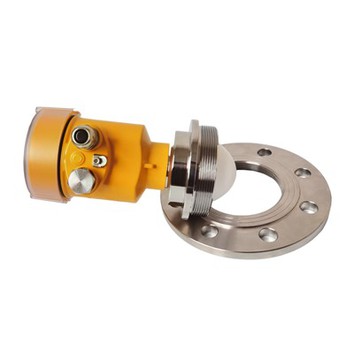


Features of Radar Level Gauge
Continuous and Accurate Measurement
Due to the characteristics of electromagnetic waves, radar level gauges are not affected by environmental conditions. This makes their measurement applications quite versatile. The probe of the radar level gauge does not contact the surface of the medium, allowing for non-contact measurement that accurately and quickly assesses different media. The probe is minimally affected by temperature, pressure, gas, and other factors.
Interference Echo Suppression
The radar level gauge features an automatic suppression function for interference echoes. For example, echoes caused by joints in the beam range or noise from feeding or discharging can be suppressed by the internal fuzzy logic control.
Accurate, Safe, and Energy-Efficient
The radar level gauge can measure under vacuum and pressure conditions. It is accurate and safe, with strong adaptability for various applications. The chemical and mechanical properties of the materials used in the radar level gauge are quite stable, and the materials can be recycled, making it environmentally friendly.
No Maintenance and Strong Durability
Microwaves are nearly free from interference and do not directly contact the measuring medium. This gauge can be used in a variety of applications, including vacuum measurement, liquid level measurement, and material level measurement. Due to the use of advanced materials, it is durable under complex chemical and physical conditions and can provide accurate, reliable, and long-term stable analog or digital signals.
Convenient Maintenance and Simple Operation
The radar level gauge is equipped with fault alarm and self-diagnosis functions. It analyzes faults based on error codes displayed on the operation module, allowing for timely fault identification and resolution. This simplifies maintenance and calibration, ensuring the instrument operates normally.
Wide Range of Applications
The radar level gauge can measure almost all media. It can assess the liquid level in various tank shapes, including spherical tanks, horizontal tanks, cylindrical tanks, and conical tanks. Depending on the tank function, it can measure levels in storage tanks and buffer tanks, as well as in microwave tubes and bypass tubes. It can effectively measure liquids, particles, slurries, and more.
How does Radar Level Gauge work?

Guided wave radar transmitter
It is based on the ‘time of flight’ principle. It consists of electronics housed in an enclosure and a waveguide i.e. probe to guide the radio wave into the process media.
Low energy electromagnetic pulses of 1 GHz from the electronics are transmitted along with the probe which travels down along the probe at the speed of light into the process media and their partial energy is reflected back to the sensor circuitry.
The intensity of reflection depends on the dielectric constant value of the media. The electronics measures the time delay between transmitted and reflected signal and calculate the distance of the surface of process media using formula – Distance = (Speed of light x time delay) / 2, Level = (Tank height – Distance)
The Radar Level Transmitter is programmed with tank height and the corresponding level is calculated by the microprocessor.
It is also used for liquid-liquid interface level measurement only when upper layer media is of low dielectric and the difference between two dielectric constants is >10.
Residual electromagnetic pulses after the first reflection continue to travel down the probe through the low dielectric media and again reflected back. The second reflected signal determines the interface level.
Non-contact radar transmitter
It uses a high-frequency microwave signal of 26 GHz which is transmitted via an antenna towards the product surface. Its frequency increases linearly during the measurement.
The signal is reflected back to the antenna from the surface of process media and received at the time-delayed frequency.
The difference is calculated from actual transmitting frequency and received frequency which is directly proportional to distance to the liquid surface from antenna.
The frequency of non- contact radar level transmitter affects on the performance of the level transmitter. Lower frequency increases the beam width and reduces the sensitivity due to vapor, foam, and deposition on the antenna.

Guided wave radar level transmitters are typically equipped with a flexible cable or rigid probe-type antennae engineered from robust corrosion-resistant materials. Stainless steel, Hastelloy, and titanium are often used to engineer the sensor that protrudes into a container from above. In some applications, radar level transmitters can be installed horizontally with sensors adjusted to 90° angles. These components generate and transmit microwave pulses across a highly focused energy path before detecting them after reflection.
The speed of a microwave is typically unaffected by process variables such as pressure, temperature, and density. This, combined with the elimination of beam-spread phenomena due to the confinement of incident radio waves, provides a signal that is as much as twenty times more efficient than through-air radar systems.
These signals are transmitted directly to the electronics module through a radio frequency interference (RFI) filter to reduce background noise and provide reliable output readings. Standard graphical displays show level measurement as a function of liquid height in the containment vessel. Advanced radar level transmitters are equipped with additional digital display capabilities, including waveform screens for real-time level monitoring and built-in diagnostics.
Applications of Radar Level Gauge


Petrochemical Industry
Tank Level Measurement: Measure the levels of various crude oils, refined oils, chemicals, and other storage materials to ensure the safe operation of storage tanks.
Reaction Kettle Level Measurement: Monitor the level of reaction liquids in the reaction kettle to control the reaction process.
Pipeline Level Measurement: Measure the liquid level in pipelines to prevent overflow or drying out.
Power Industry
Boiler Water Level Measurement: Monitor the boiler water level to ensure safe operation.
Condensate Tank Level Measurement: Measure the level in the condensate tank to control water supply.
Coal Storage Bin Level Measurement: Measure the coal level in the storage bin to manage coal supply effectively.
Food and Beverage Industry
Fermentation Tank Level Measurement: Monitor the level of culture medium in fermentation tanks to control the fermentation process.
Liquid Level Measurement in Storage Tanks: Measure the liquid levels of various raw materials and finished products to ensure continuity in the production process.
Pipeline Level Measurement: Measure the levels of materials in pipelines to prevent blockage or overflow.
Pharmaceutical Industry
Reaction Kettle Level Measurement: Monitor the level of reaction liquids in the reaction kettle to control the reaction process.
Pure Water Tank Level Measurement: Measure the level in the pure water tank to ensure a consistent supply of pure water.
Filling Line Level Measurement: Monitor the level of liquid on the filling line to ensure product quality.
Water Treatment Industry
Sewage Tank Level Measurement: Monitor the level in sewage tanks to control the sewage treatment process.
Clear Pool Level Measurement: Monitor the level of the clear pool to ensure safe water supply.
Sedimentation Tank Level Measurement: Monitor the level in the sedimentation tank to control the sedimentation process.
Other Industries
Paper Industry: Measure the liquid level in pulp pools and white water tanks.
Metallurgical Industry: Measure the liquid level in blast furnaces, converters, and other equipment.
Environmental Protection Industry: Measure the liquid level in sludge tanks and wastewater tanks.
Factors to Consider When Choosing a Radar Level Gauge
When selecting a radar level transmitter for a specific application, several factors should be considered to ensure the device meets the requirements of the process and environment.
Application Requirements
The specific requirements of the application, such as the type of substance being measured, process conditions, and the size and shape of the tank or vessel, should be thoroughly evaluated. Understanding these requirements is essential for selecting a device that can provide accurate and reliable level measurement.
01
Environmental Conditions
The environmental conditions in which the radar level transmitter will be installed—such as temperature, pressure, vapor, dust, and potential obstructions—should be carefully assessed. It is crucial to choose a device that can perform effectively under these conditions to ensure accurate and reliable level measurement.
02
Installation and Maintenance
Consideration should be given to the ease of installation and maintenance of the radar level transmitter. Look for devices that offer a user-friendly design for quick and hassle-free installation, as well as minimal maintenance requirements to reduce downtime and ensure continuous level measurement.
03
Cost and ROI
The cost of the radar level transmitter and the potential return on investment (ROI) should be evaluated to determine the overall value of the device for the specific application. Consider the initial purchase price along with the long-term costs associated with installation, maintenance, and reliability to make an informed decision.
04
Manufacturer Reputation
The reputation and track record of the radar level transmitter manufacturer should also be taken into account. Look for manufacturers with a proven history of producing high-quality, reliable, and innovative level measurement solutions to ensure the performance and longevity of the device.
05
Different measurement principles
Ultrasonic Level Transmitter uses sound waves, while radar uses electromagnetic waves. This is the biggest difference between the two.
Ultrasonic Level Transmitter:
When the Ultrasonic Level Transmitter works, high-frequency pulse sound waves are emitted by the transducer (probe). When they encounter the surface of the object to be measured (water surface), they are reflected. The refracted reflection echo is received by the same transducer (probe) and converted into an electrical signal.
The time between pulse transmission and reception (the movement time of the sound wave) is proportional to the distance from the transducer to the object surface. The relationship between the distance S of sound wave transmission, the speed of sound C and the transmission time T can be expressed by the formula: S= CⅩT /2
Radar Level Meter:
Transmission-reflection-reception is the basic working principle of Radar Level Meter. The antenna of the radar sensor emits electromagnetic wave signals in the form of a beam, and the emitted waves are reflected on the surface of the material being measured. The reflected echo signals are still received by the antenna.
Each point in the transmitted and reflected beams is collected using ultrasonic sampling. After the signal is processed by the intelligent processor, the distance between the medium and the probe is obtained and sent to the terminal display for display, alarm, operation, etc.
Radar Level Gauge Installation Precautions
The accuracy of a radar level gauge's measurements depends on the reflected wave signal. If the selected installation position does not allow the liquid level to reflect the electromagnetic wave back to the radar antenna, or if there is an object within the signal wave range that reflects interference waves, the radar level gauge cannot accurately measure the liquid level. Therefore, choosing a reasonable installation location is crucial. Please pay attention to the following points during installation:
Antenna Positioning: The axis of the radar level gauge antenna should be perpendicular to the reflective surface of the liquid level.
Avoiding Interference: Objects such as stirring valves, wall adhesion, and steps within the radar level gauge's signal range can produce interference reflected waves, affecting liquid level measurement. Select an appropriate installation location to avoid interference from these factors.
Antenna Extension: The horn of the horn-type radar level gauge should extend beyond the inner surface of the mounting hole by a distance greater than 10 mm. The antenna of the rod level gauge should also extend beyond the mounting hole, and the hole length should not exceed 100 mm. For round or elliptical containers, the gauge should be placed at a distance of 1/2R from the center (where R is the radius of the container). It should not be positioned at the center of the top, as radar waves may reflect off the container walls multiple times, creating strong interference that can affect accurate measurement.
Dealing with Fluctuations: For containers with large fluctuations in liquid level, consider using a level gauge with a bypass pipe to minimize the impact of these fluctuations.
After installation, use a PC to observe the reflected wave curve to determine whether the level gauge is installed correctly. If not, adjust the installation position until satisfactory results are achieved.
Our Factory
Zhejiang Dongyi Technology Co., Ltd. was formerly known as Hangzhou Tuosheng Automation Instrument Co., Ltd. "TUOSHENG" was founded in 2010. It has been deeply involved in the industrial instrument industry for more than ten years and has profound technical accumulation. Dongyi Company was built by the original team of "Tuosheng" and its headquarters is located in the beautiful paradise on earth - Hangzhou, Zhejiang. In 2023, the company began to prepare for international cross-border business, and registered and established Hangzhou Dongyi Import and Export Co., Ltd. in 2024 to enter the international market.


FAQ
We're well-known as one of the leading radar level gauge manufacturers and suppliers in China. Please feel free to buy high quality radar level gauge made in China here from our factory. Contact us for customized service.
Two wire Radar Level Gauge, Explosion proof Radar Level Gauge