

Can a radar level meter be used in food and beverage industries?
As a supplier of radar level meters, I often get asked whether our products can be used in the food and beverage industries. The answer is a resounding yes, and in this blog post, I'll explain why radar level meters are an excellent choice for these sectors, the benefits they offer, and some considerations when using them.
Why Radar Level Meters are Suitable for Food and Beverage Industries
The food and beverage industries have unique requirements when it comes to level measurement. Hygiene, accuracy, and reliability are of utmost importance. Radar level meters meet these requirements in several ways.
First, radar level meters use non - contact measurement technology. This means that there is no physical contact between the measuring device and the product being measured. In the food and beverage industries, where maintaining product purity is crucial, non - contact measurement helps prevent contamination. For example, when measuring the level of milk in a storage tank, a non - contact radar level meter won't introduce any foreign substances into the milk, ensuring its safety and quality.
Second, radar level meters offer high accuracy. In the food and beverage production process, precise level measurement is necessary for inventory management, production control, and quality assurance. Whether it's measuring the level of a liquid ingredient in a mixing tank or the amount of finished product in a storage silo, radar level meters can provide accurate readings. This accuracy helps in optimizing production processes, reducing waste, and ensuring consistent product quality.
Third, radar level meters are highly reliable. They are not affected by factors such as changes in temperature, pressure, or the presence of vapors. In the food and beverage industries, where processes often involve high - temperature cooking, pasteurization, or carbonation, radar level meters can operate stably under these challenging conditions. For instance, in a brewery, where fermentation tanks operate at specific temperatures and pressures, a radar level meter can accurately measure the level of beer throughout the fermentation process.

Benefits of Using Radar Level Meters in Food and Beverage Industries
Hygiene and Compliance
As mentioned earlier, non - contact measurement is a significant advantage in terms of hygiene. Additionally, many radar level meters are designed to meet strict industry standards and regulations. For example, they can be made from materials that are food - grade and resistant to corrosion, ensuring that they are suitable for use in direct contact with food products. This compliance with industry standards helps food and beverage manufacturers meet regulatory requirements and maintain the highest levels of food safety.
Cost - Effectiveness
Radar level meters can be cost - effective in the long run. Their high accuracy reduces the risk of over - filling or under - filling tanks, which can lead to product waste and additional costs. Moreover, their reliability means less maintenance and fewer replacements, resulting in lower overall operating costs. For a large - scale food processing plant, these cost savings can be substantial over time.
Integration with Existing Systems
Most radar level meters can be easily integrated with existing control systems in food and beverage plants. This allows for seamless monitoring and control of levels in real - time. For example, the data from a radar level meter can be transmitted to a central control room, where operators can monitor the levels of multiple tanks simultaneously and take appropriate actions if necessary. This integration improves operational efficiency and reduces the need for manual intervention.
Considerations When Using Radar Level Meters in Food and Beverage Industries
Installation and Calibration
Proper installation and calibration are essential for accurate and reliable operation. The installation location should be carefully chosen to ensure that the radar beam has a clear path to the product surface. Obstructions such as pipes, agitators, or foam can affect the measurement accuracy. Additionally, calibration should be performed regularly to account for any changes in the product properties or the operating environment.
Product Compatibility
Although radar level meters are generally suitable for a wide range of food and beverage products, it's important to consider the specific properties of the product being measured. For example, highly viscous products or products with a high solids content may require a different type of radar level meter or a specific antenna design. Some products may also have a high dielectric constant, which can affect the radar signal. It's crucial to consult with a technical expert to select the most appropriate radar level meter for the specific application.
Maintenance and Cleaning
Even though radar level meters require less maintenance compared to other types of level measurement devices, regular maintenance and cleaning are still necessary. In the food and beverage industries, where hygiene is a top priority, the radar level meter should be cleaned regularly to prevent the buildup of food residues. Some radar level meters are designed with easy - to - clean features, such as smooth surfaces and removable antennas, which can simplify the cleaning process.
Our Radar Level Meter Products for Food and Beverage Industries
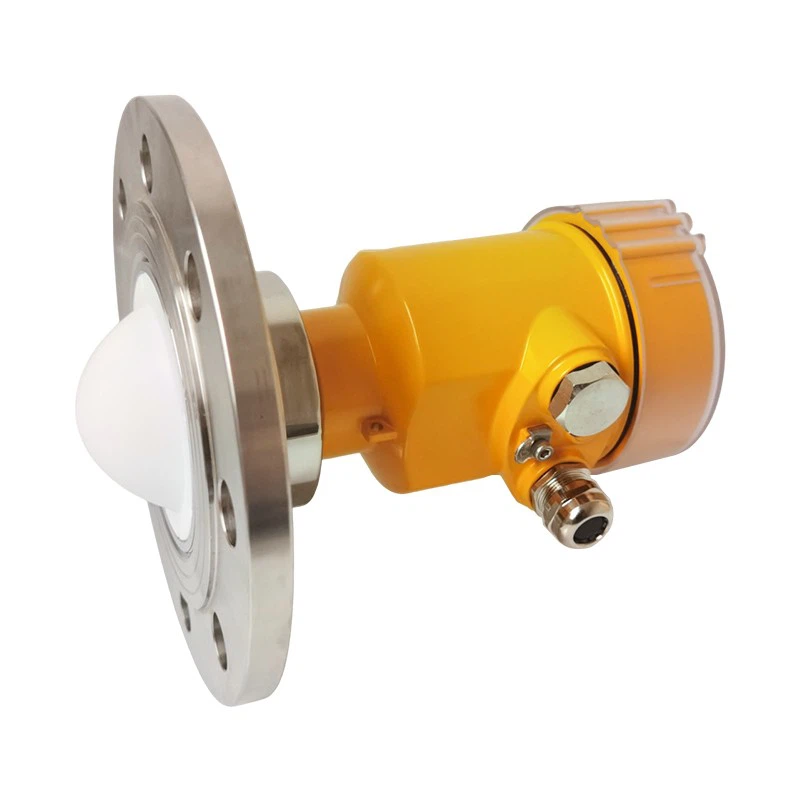
We offer a range of radar level meters that are specifically designed for the food and beverage industries. Our High Precision Radar Level Gauge provides extremely accurate level measurements with a high degree of reliability. It is suitable for use in various applications, from small - scale ingredient tanks to large - scale storage silos.
Another product, the Two Line Integrated Ultrasonic Level Gauge Tsl300n, is a cost - effective solution that offers excellent performance in measuring liquid levels. It is easy to install and integrate with existing systems, making it a popular choice for many food and beverage manufacturers.
Conclusion
In conclusion, radar level meters are an ideal choice for the food and beverage industries. Their non - contact measurement, high accuracy, reliability, and compliance with industry standards make them well - suited for the unique requirements of these sectors. However, proper installation, calibration, and maintenance are necessary to ensure optimal performance.
If you are in the food and beverage industry and are looking for a reliable level measurement solution, we invite you to contact us for more information. Our team of experts can help you select the most suitable radar level meter for your specific application and provide you with professional installation and after - sales support. Let's work together to improve the efficiency and safety of your food and beverage production processes.
References
- "Level Measurement in the Food and Beverage Industry" - A technical report on level measurement technologies in food and beverage applications.
- Manufacturer's guides for radar level meters, which provide detailed information on product features, installation, and maintenance.