

Can a radar level meter be used in the oil and gas industry? You bet it can! As a supplier of radar level meters, I've seen firsthand how these nifty devices have revolutionized the way the oil and gas industry manages its inventory and processes. In this blog, I'll dive into why radar level meters are a great fit for the oil and gas sector, their benefits, and how they stack up against other level measurement technologies.
First off, let's talk about what a radar level meter is. Simply put, it's a device that uses radar technology to measure the level of liquids or solids in a tank or container. It sends out a radar signal that bounces off the surface of the material and back to the sensor. By measuring the time it takes for the signal to return, the meter can accurately calculate the distance to the surface and, thus, the level of the material inside.
Now, why is this so important in the oil and gas industry? Well, this industry deals with large volumes of valuable and often hazardous substances, like crude oil, natural gas, and refined products. Accurate level measurement is crucial for a whole bunch of reasons. For starters, it helps in inventory management. Knowing exactly how much product is in a tank at any given time allows companies to plan their production, transportation, and sales more effectively. It also helps in preventing overfilling or underfilling of tanks, which can lead to costly spills, leaks, or production disruptions.
Another big advantage of using radar level meters in the oil and gas industry is their ability to work in harsh environments. These meters are designed to withstand extreme temperatures, pressures, and corrosive substances, which are common in oil and gas facilities. Whether it's an offshore oil rig, a refinery, or a storage terminal, radar level meters can provide reliable and accurate measurements even in the toughest conditions.
Let's take a closer look at some of the specific benefits of using radar level meters in the oil and gas industry:
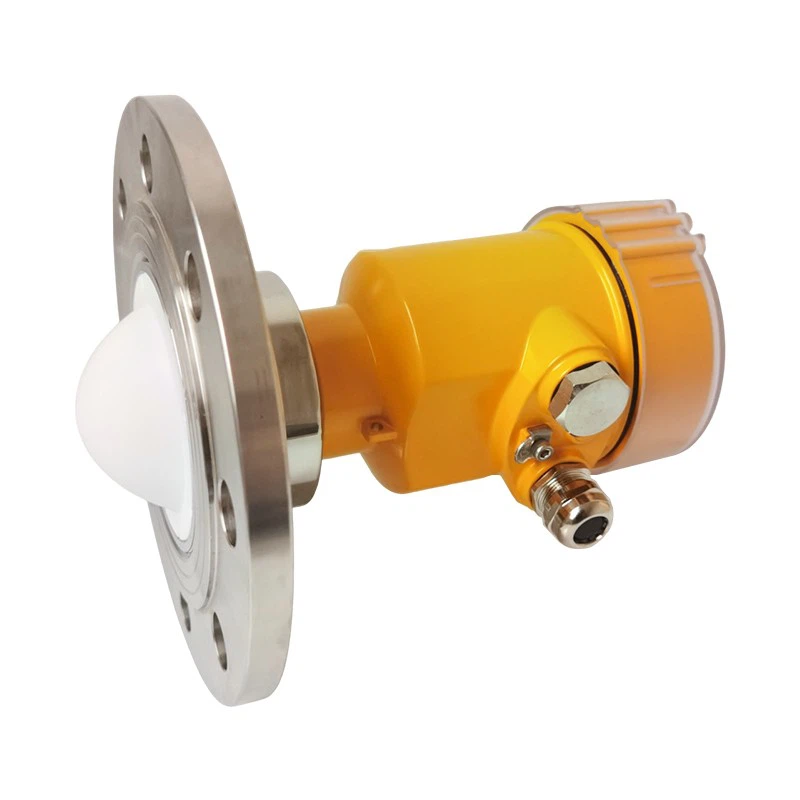

High Accuracy
Radar level meters offer a high degree of accuracy, often within a few millimeters. This level of precision is essential in the oil and gas industry, where even small errors in level measurement can result in significant financial losses. For example, in a large storage tank, a small miscalculation in the level can mean thousands of dollars' worth of product being misaccounted for.
Non-Contact Measurement
One of the biggest advantages of radar level meters is that they are non-contact devices. This means they don't come into direct contact with the material being measured, which reduces the risk of contamination and wear and tear. In the oil and gas industry, where many substances are highly corrosive or abrasive, non-contact measurement is a huge plus. It also makes the meters easier to install and maintain, as there's no need to worry about the sensor getting damaged by the material.
Wide Range of Applications
Radar level meters can be used in a variety of applications in the oil and gas industry, from measuring the level of crude oil in storage tanks to monitoring the level of natural gas in pipelines. They can also be used in different types of tanks, including above-ground and underground tanks, as well as in vessels with different shapes and sizes.
Easy Integration
Most radar level meters are designed to be easily integrated into existing control systems. This means they can be connected to a computer or a PLC (programmable logic controller) to provide real-time data and allow for remote monitoring and control. In the oil and gas industry, where many facilities are located in remote areas, easy integration and remote monitoring capabilities are essential for efficient operation.
Now, let's compare radar level meters with some other common level measurement technologies used in the oil and gas industry, such as ultrasonic level gauges.
Ultrasonic level gauges work on a similar principle to radar level meters, but they use ultrasonic waves instead of radar signals. While ultrasonic level gauges are also non-contact devices and can provide accurate measurements in many applications, they have some limitations in the oil and gas industry. For example, ultrasonic waves can be affected by factors like temperature, humidity, and the presence of dust or steam in the air. In the harsh and often volatile environments of oil and gas facilities, these factors can make it difficult for ultrasonic level gauges to provide reliable and accurate measurements.
On the other hand, radar level meters are less affected by these environmental factors. Radar signals can penetrate through dust, steam, and other obstacles, making them more reliable in challenging conditions. They also offer a higher level of accuracy and can be used in a wider range of applications.
If you're in the market for a high-quality radar level meter for your oil and gas operation, I'd like to recommend our High Precision Radar Level Gauge. This meter offers exceptional accuracy and reliability, and it's designed to withstand the toughest conditions in the oil and gas industry. We also have the Two Line Integrated Ultrasonic Level Gauge Tsl300n, which is a great option for applications where a more cost-effective solution is needed.
In conclusion, radar level meters are an excellent choice for the oil and gas industry. They offer high accuracy, non-contact measurement, wide application range, and easy integration, making them a reliable and efficient solution for level measurement in this sector. If you're looking for a radar level meter for your oil and gas operation, don't hesitate to reach out to us. We'd be happy to discuss your specific needs and help you find the right solution for your business.
References
- Smith, J. (2020). Level Measurement Technologies in the Oil and Gas Industry. Journal of Petroleum Engineering, 15(2), 45-56.
- Johnson, A. (2019). The Advantages of Radar Level Meters in Harsh Environments. Industrial Instrumentation & Technology, 22(3), 78-85.