

As a supplier of radar level meters, I've witnessed firsthand the importance of accuracy in these devices. Radar level meters are widely used across various industries, from oil and gas to food and beverage, to measure the level of liquids or solids in tanks or containers. The accuracy of a radar level meter can significantly impact operational efficiency, safety, and cost - effectiveness. In this blog, I'll delve into the factors that can affect the accuracy of a radar level meter.
1. Physical Properties of the Measured Medium
The physical properties of the substance being measured play a crucial role in the accuracy of a radar level meter.
Dielectric Constant
The dielectric constant (also known as relative permittivity) of a medium affects how the radar signal interacts with it. A higher dielectric constant allows the radar signal to reflect more effectively. For example, water has a relatively high dielectric constant (around 80 at room temperature), which makes it easy for the radar level meter to detect the liquid surface accurately. On the other hand, substances with low dielectric constants, such as some hydrocarbons (with dielectric constants around 2 - 3), may pose challenges. The radar signal may not reflect as strongly, leading to reduced accuracy. To address this, some advanced radar level meters are designed to handle low - dielectric materials more effectively, but it remains an important consideration.
Viscosity and Density
Highly viscous or dense substances can also impact the accuracy of radar level measurement. Viscous materials may cause the formation of a film on the antenna of the radar level meter. This film can absorb or scatter the radar signal, leading to incorrect readings. Similarly, dense materials may have a non - uniform surface, especially in the case of solids. The irregular surface can cause the radar signal to reflect in multiple directions, making it difficult for the meter to determine the exact level.
Foam and Vapor
Foam on the surface of the measured medium can be a significant source of error. Foam scatters the radar signal, causing multiple reflections. As a result, the radar level meter may detect the foam surface instead of the actual liquid surface, leading to inaccurate level readings. Vapor above the liquid can also absorb or refract the radar signal, depending on its composition and density. For instance, in a chemical processing plant, vapor from volatile chemicals can distort the radar signal and affect measurement accuracy.
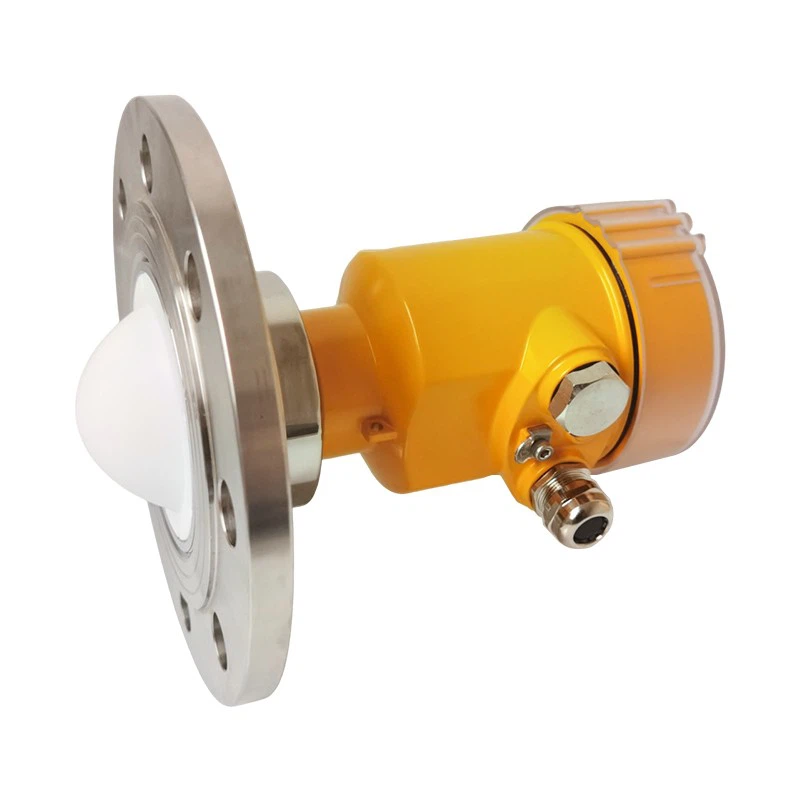

2. Environmental Conditions
The environment in which the radar level meter operates can have a substantial impact on its accuracy.
Temperature
Extreme temperatures can affect the performance of the radar level meter in several ways. High temperatures can cause thermal expansion of the antenna and other components of the meter. This expansion can change the shape and dimensions of the antenna, altering the way the radar signal is emitted and received. On the other hand, low temperatures can make the electronics of the meter less responsive. Some radar level meters are designed to operate within a specific temperature range, and operating outside of this range can lead to inaccurate readings.
Pressure
Pressure changes can also influence the accuracy of radar level measurement. In high - pressure environments, the radar signal may be affected by the compression of the air or gas around the antenna. This can cause changes in the speed of the radar wave and the way it reflects off the measured medium. Additionally, pressure changes can cause the measured medium to behave differently. For example, in a high - pressure tank, the liquid may compress slightly, which can affect the level measurement.
Humidity
High humidity can cause moisture to accumulate on the antenna of the radar level meter. Moisture can absorb the radar signal, leading to reduced signal strength and inaccurate readings. In some cases, moisture can also cause corrosion of the antenna, which can further degrade the performance of the meter over time.
3. Installation and Mounting
Proper installation and mounting of the radar level meter are essential for accurate measurement.
Antenna Placement
The position of the antenna relative to the measured medium is critical. If the antenna is not properly aligned, the radar signal may not reach the surface of the medium at the correct angle. This can result in weak reflections or multiple reflections, leading to inaccurate readings. For example, if the antenna is installed too close to the wall of the tank, the signal may reflect off the wall before reaching the liquid surface, causing interference.
Tank Geometry
The shape and size of the tank or container can also affect the accuracy of the radar level meter. Irregularly shaped tanks, such as those with baffles or internal structures, can cause the radar signal to reflect in unexpected ways. These reflections can create false echoes, making it difficult for the meter to determine the actual level. Additionally, the size of the tank can impact the signal strength. In large tanks, the radar signal may weaken as it travels to the surface of the medium and back, reducing the accuracy of the measurement.
4. Signal Interference
Radar level meters operate by emitting and receiving electromagnetic signals. Any interference with these signals can affect the accuracy of the measurement.
External Electromagnetic Fields
External electromagnetic fields, such as those generated by nearby electrical equipment or radio transmitters, can interfere with the radar signal. These fields can add noise to the received signal, making it difficult for the meter to distinguish between the true reflection from the measured medium and the interference. To mitigate this issue, radar level meters are often shielded to reduce the impact of external electromagnetic fields. However, in environments with high levels of electromagnetic interference, additional measures may be required.
Multiple Radar Units
In some industrial settings, multiple radar level meters may be installed in close proximity. The signals from these meters can interfere with each other, causing false echoes and inaccurate readings. To avoid this, proper spacing and frequency selection are necessary. Radar level meters can be configured to operate on different frequencies to minimize interference.
5. Calibration and Maintenance
Calibration and maintenance are crucial for ensuring the long - term accuracy of radar level meters.
Calibration
Proper calibration is essential to ensure that the radar level meter provides accurate readings. During calibration, the meter is adjusted to account for the specific properties of the measured medium and the installation environment. Over time, the performance of the meter may change due to factors such as temperature variations, component aging, or changes in the measured medium. Regular calibration is necessary to maintain accuracy. If a radar level meter is not calibrated correctly, it can provide readings that are significantly off from the actual level.
Maintenance
Regular maintenance is also important for the accuracy of radar level meters. This includes cleaning the antenna to remove any debris, film, or moisture that may have accumulated. Inspecting the electronics and wiring for any signs of damage or wear is also necessary. A well - maintained radar level meter is more likely to provide accurate and reliable measurements over its lifespan.
In conclusion, the accuracy of a radar level meter is affected by a variety of factors, including the physical properties of the measured medium, environmental conditions, installation and mounting, signal interference, and calibration and maintenance. As a supplier, we offer a range of high - quality radar level meters, such as the Two Line Integrated Ultrasonic Level Gauge Tsl300n and the High Precision Radar Level Gauge, which are designed to minimize the impact of these factors and provide accurate measurements.
If you're looking for a reliable radar level meter for your specific application, I encourage you to contact us for a detailed discussion. We can help you select the right product and provide guidance on installation, calibration, and maintenance to ensure the highest level of accuracy and performance.
References
- "Radar Level Measurement Technology" - A technical handbook on radar level meters published by a leading instrumentation manufacturer.
- "Industrial Measurement and Control" - A textbook that covers various aspects of industrial measurement, including radar level measurement.
- Industry whitepapers on radar level meter accuracy and performance.