

Intelligent electromagnetic flowmeters have a certain range of use. Please confirm whether the purchased flowmeter accurately meets your working conditions (flow, pressure, temperature) before installation.
After opening the flowmeter packaging box, please install it as soon as possible to avoid affecting the performance of the converter and corrosion of metal parts. When storing a used flowmeter, the flowmeter must be completely cleaned.
The flowmeter should not be installed in places with large temperature changes and thermal radiation from the equipment. If it must be installed, insulation and ventilation measures must be taken.
The flowmeter should not be installed in an environment containing corrosive gases. If it must be installed, ventilation measures must be taken.
The installation point of the flowmeter should be protected from mechanical vibration and spraying impact. If the flowmeter is installed in a pipeline with large vibration, the pipeline must be fixed next to the installation flowmeter.
The pipeline for installing the flowmeter must comply with the front and rear straight pipe sections specified in the manual, otherwise it will affect the measurement accuracy of the flowmeter.
The fluid flow direction should be consistent with the direction of the arrow on the flowmeter body.
When installing the flowmeter, during the welding of the flange or pipeline , the flowmeter must not be installed on the pipeline to avoid damaging the flowmeter's email.
The flowmeter should not be installed on an overhead long and thin pipeline, which is prone to leakage. If it must be installed, the pipeline must be fixed next to the flowmeter.
The flowmeter can be installed in horizontal and vertical pipelines. If installed in a vertical pipeline, the fluid must flow from bottom to top
For easy maintenance, it should be installed in a bypass pipeline, especially in some production processes where the fluid cannot be stopped in the middle.
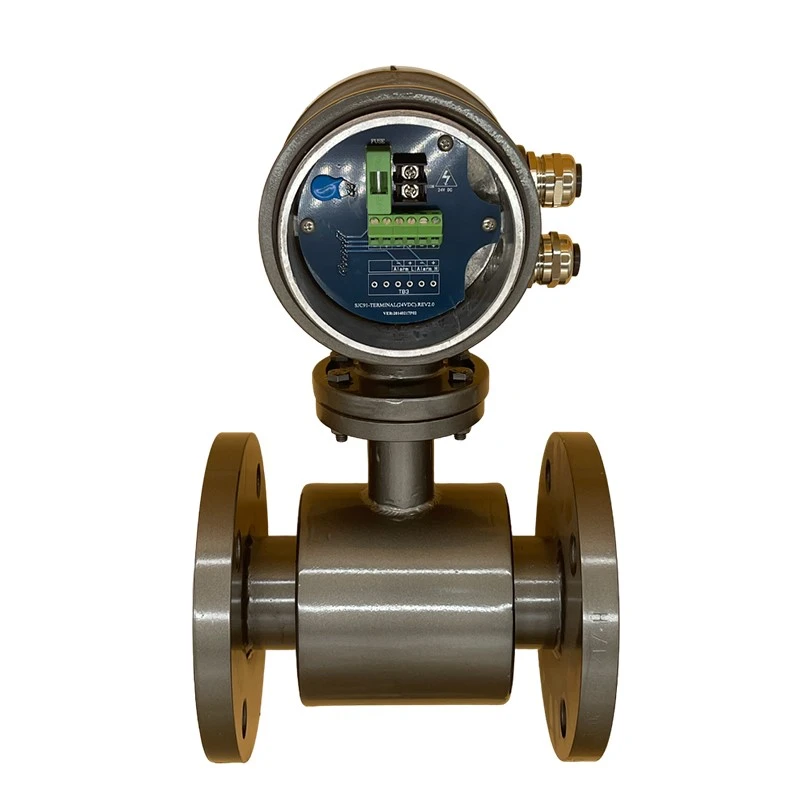
When the flowmeter must be installed outdoors, moisture-proof and sun-proof measures must be taken.
There must be ample space around the flowmeter, and there should be lighting and power sockets to facilitate installation, wiring and regular maintenance.
The connection of the split flowmeter must use a special shielded wire, which should be firmly connected. The connection should not be parallel to the power line, and the interval should be at least 15cm. It is best to run it alone in a metal pipe. The connection should be fixed and not shaken.
The installation location of the flow meter should be away from electrical noise and electromagnetic fields, such as high-power transformers, motors and power supplies.
There should be no radio transceivers near the flow meter installation point, otherwise the high-level noise will interfere with the normal use of the flow meter.
When installing a split flow meter, pay attention to the distance between the sensor and the converter cannot exceed 100m (use a special shielded cable), otherwise it will cause interference.
The pressure of the pipeline where the flow meter is installed cannot exceed the rated maximum working pressure.
When the flow meter components are under pressure, the probe fastening screws and flange installation bolts cannot be tightened or loosened.