

Hey there! As a level transmitter supplier, I often get asked this question: Can a level transmitter measure the level of cryogenic liquids? Well, let's dive right into it and find out.
First off, what are cryogenic liquids? These are substances that are kept at extremely low temperatures, usually below -150°C (-238°F). Common examples include liquid nitrogen, liquid oxygen, and liquid helium. They're used in a wide range of industries, from healthcare and food processing to aerospace and energy.
Now, back to the main question. The short answer is yes, a level transmitter can measure the level of cryogenic liquids. But it's not as simple as just slapping any old transmitter onto a cryogenic tank. There are a few things we need to consider.
One of the biggest challenges with cryogenic liquids is their low temperature. Most level transmitters are designed to work within a certain temperature range, and cryogenic temperatures can be way outside of that. Extreme cold can cause materials to become brittle, which might lead to cracks or other failures in the transmitter. So, we need to use transmitters made from materials that can withstand these frigid conditions. For example, stainless steel is a popular choice because it's strong and has good resistance to low temperatures.
Another factor is the density of cryogenic liquids. Different cryogenic substances have different densities, and this can affect how accurately a level transmitter can measure the level. Some transmitters work based on the principle of hydrostatic pressure, where the pressure at the bottom of a tank is proportional to the height of the liquid column above it. But if the density of the liquid changes due to temperature variations or other factors, this can throw off the measurement. That's why it's important to choose a transmitter that can account for these density changes.
Let's talk about the different types of level transmitters that can be used for cryogenic liquids. One option is the Pressure Level Transmitter. These transmitters measure the pressure exerted by the liquid at the bottom of the tank and convert it into a level reading. They're relatively simple and reliable, but as I mentioned earlier, they need to be designed to handle the low temperatures and density variations of cryogenic liquids.
Another type is the Double Flange Liquid Level Transmitter. This type of transmitter has two flanges, one at the bottom of the tank and one at the top. It measures the differential pressure between the two points to determine the level of the liquid. Double flange transmitters are often used in applications where the tank is pressurized or where there are significant changes in the liquid level. They can be more accurate than single-point pressure transmitters, but they're also a bit more complex and expensive.
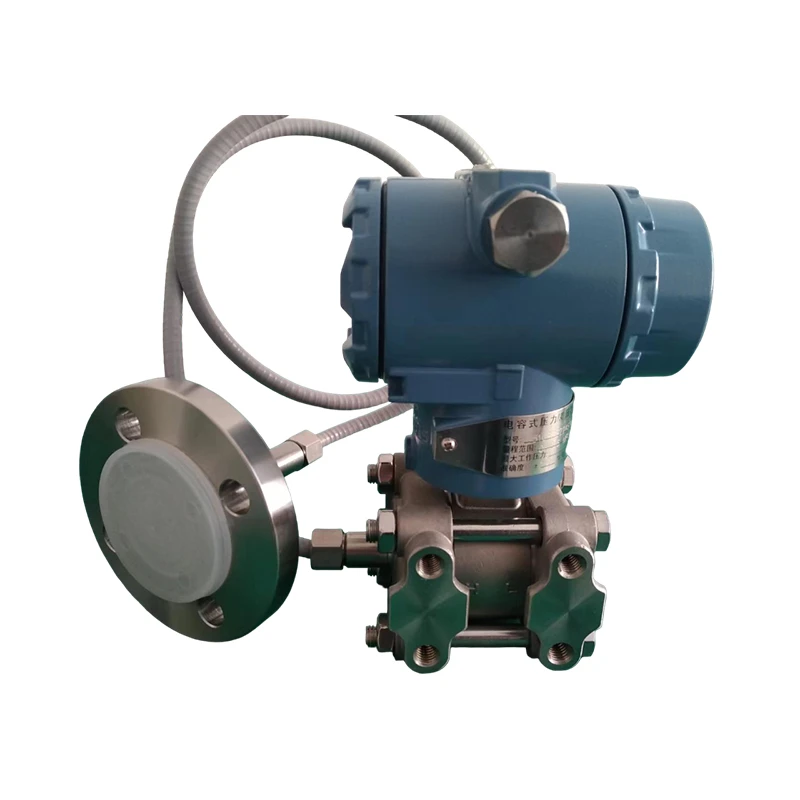
Then there's the Single Flange Level Transmitter. As the name suggests, this transmitter has only one flange, which is typically mounted at the bottom of the tank. It's a simpler and more cost-effective option compared to the double flange transmitter, but it may not be as accurate in some situations.
When choosing a level transmitter for cryogenic liquids, it's also important to consider the installation requirements. Cryogenic tanks are often large and difficult to access, so the transmitter needs to be easy to install and maintain. Some transmitters can be installed externally, which can make maintenance and replacement a lot easier. Others may need to be installed internally, which requires more careful planning and may involve shutting down the tank for installation.
In addition to the technical considerations, there are also safety issues to keep in mind. Cryogenic liquids are extremely cold and can cause serious injury if they come into contact with skin or eyes. So, any level transmitter used in a cryogenic application needs to be designed with safety in mind. This may include features like leak detection and isolation valves to prevent spills and ensure the safety of personnel.
So, to sum it up, yes, a level transmitter can measure the level of cryogenic liquids, but it requires careful selection and installation. As a level transmitter supplier, we have a wide range of products that are specifically designed for cryogenic applications. Our team of experts can help you choose the right transmitter for your needs, taking into account factors like temperature, density, installation requirements, and safety.
If you're in the market for a level transmitter for your cryogenic liquid application, don't hesitate to reach out to us. We'd be happy to have a chat and see how we can help you get the most accurate and reliable level measurements for your tanks. Whether you're a small business or a large industrial operation, we have the solutions to meet your needs.
Let's work together to ensure that your cryogenic liquid storage and handling processes run smoothly and efficiently. Contact us today to start the conversation about your level measurement requirements.
References

- "Level Measurement in Cryogenic Applications", Journal of Industrial Instrumentation
- "Cryogenic Engineering Handbook", edited by John Frost