

Hey there! As a supplier of submersible level gauges, I've been getting a bunch of questions lately about whether these nifty devices need a surge protector. It's a great question, and today, I'm gonna dive deep into this topic and give you the lowdown.
First off, let's quickly understand what a submersible level gauge is. These things are super useful for measuring the level of liquids in tanks, wells, rivers, and all sorts of places. They're designed to be submerged in the liquid, and they use different technologies to accurately determine the liquid level. We offer a variety of submersible level gauges, like the Submersible Liquid Level Sensor, the Input Type Static Pressure Liquid Level Transmitter, and the putting-into-type liquid level meter. Each of these has its own unique features and applications, but they all share the common goal of providing reliable level measurements.
Now, let's talk about surge protectors. A surge protector is basically a device that protects your electrical equipment from sudden voltage spikes, also known as surges. These surges can be caused by a variety of things, like lightning strikes, power grid fluctuations, or even the switching on and off of large electrical devices nearby. When a surge occurs, it can send a huge amount of electrical energy into your equipment, which can damage or even destroy it.
So, does a submersible level gauge need a surge protector? Well, the answer isn't a simple yes or no. It depends on a few factors.
Environmental Factors
One of the biggest factors to consider is the environment where the submersible level gauge is installed. If it's in an area that's prone to lightning strikes, then a surge protector is definitely a good idea. Lightning can cause massive voltage spikes in the electrical system, and these spikes can easily travel through the power lines and into your submersible level gauge. Even if the gauge is submerged in liquid, it's still connected to the electrical system, and a surge can damage its internal components.

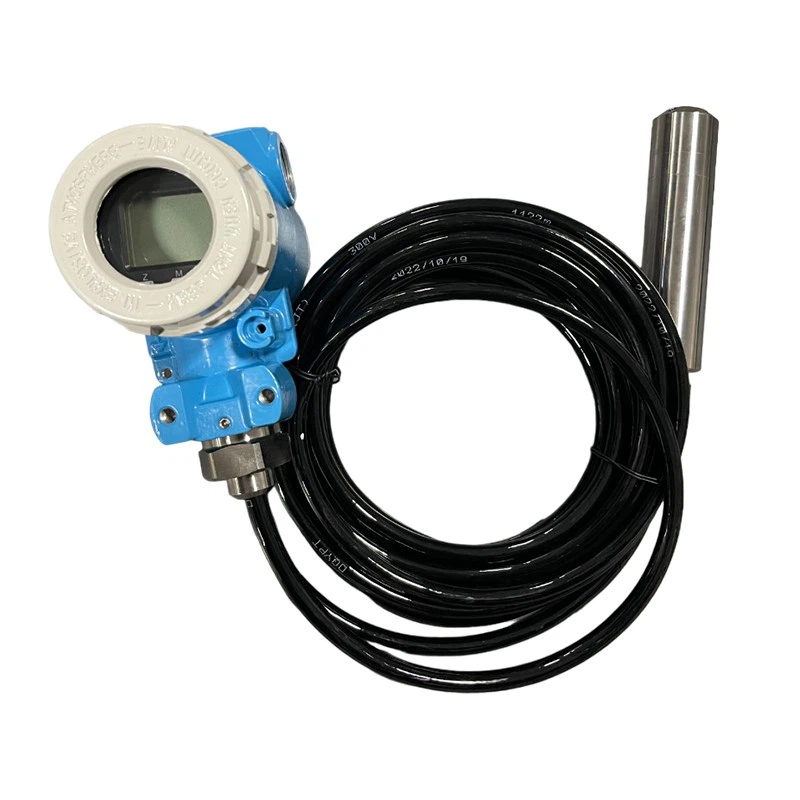
For example, if you're using a submersible level gauge in a rural area with a lot of open space and tall trees, the risk of a lightning strike is relatively high. In this case, installing a surge protector can significantly reduce the chances of your gauge getting damaged.
On the other hand, if the gauge is installed in a well - protected indoor environment, like a climate - controlled industrial building where there's little risk of lightning or major power grid fluctuations, the need for a surge protector might be less urgent. However, it's still not a bad idea to have one as an extra layer of protection.
Electrical System Stability
The stability of the electrical system that the submersible level gauge is connected to also plays a role. If you're in an area with an old or unreliable power grid, there's a higher chance of voltage fluctuations and surges. In some older buildings, the electrical wiring might not be able to handle sudden changes in voltage properly, which can lead to surges.
For instance, if you're using a submersible level gauge in an area where the power grid is frequently overloaded, or where there are a lot of large industrial machines that cause power fluctuations when they start and stop, a surge protector can help keep your gauge safe.
Cost - Benefit Analysis
Another thing to think about is the cost - benefit analysis. Surge protectors aren't free, and they do add an extra cost to your installation. However, compared to the cost of replacing a damaged submersible level gauge, the cost of a surge protector is relatively small.
If you're using a high - end, precision submersible level gauge, the cost of replacement can be quite significant. In this case, spending a little extra on a surge protector is definitely worth it. On the other hand, if you're using a more basic and inexpensive gauge, you might be more willing to take the risk of not having a surge protector. But keep in mind that even a basic gauge can be important for your operations, and a single surge can put it out of commission.
Installation and Maintenance
Installing a surge protector for your submersible level gauge is usually a straightforward process. Most surge protectors can be easily connected between the power source and the gauge. However, it's important to make sure that the surge protector is properly rated for the voltage and current requirements of your gauge.
Once installed, surge protectors also require some maintenance. They have a limited lifespan, and over time, they can wear out. It's a good idea to regularly check the surge protector to make sure it's still working properly. If it has been triggered by a surge, it might need to be replaced.
In conclusion, while a submersible level gauge might not always need a surge protector, in most cases, it's a smart investment. It can provide an extra layer of protection for your gauge, especially in environments where there's a risk of voltage surges. Whether you're using a Submersible Liquid Level Sensor, an Input Type Static Pressure Liquid Level Transmitter, or a putting-into-type liquid level meter, protecting it from surges can help ensure its long - term reliability and accuracy.
If you're still not sure whether your submersible level gauge needs a surge protector, or if you have any other questions about our products, don't hesitate to reach out. We're here to help you make the best decision for your specific needs. Whether you're a small business owner looking for a simple level gauge for your storage tank or a large industrial facility in need of a high - precision solution, we've got you covered. Contact us today to start a conversation about your requirements and let's find the perfect submersible level gauge and surge protection solution for you.
References
- Electrical Engineering Handbook, Third Edition
- Surge Protection Devices: Principles and Applications
- Submersible Level Gauge Manufacturer's Manuals