

Hey there! As a supplier of level transmitters, I often get asked about how ultrasonic level transmitters work. So, I thought I'd break it down for you in a way that's easy to understand.
Let's start with the basics. An ultrasonic level transmitter is a device used to measure the level of a liquid or solid in a tank, silo, or other container. It's a non-contact method of measurement, which means it doesn't need to touch the material being measured. This makes it ideal for measuring corrosive, viscous, or dirty substances.
How Ultrasonic Waves are Generated
The heart of an ultrasonic level transmitter is the transducer. The transducer is a device that can convert electrical energy into ultrasonic waves and vice versa. When an electrical pulse is sent to the transducer, it vibrates at a high frequency, typically between 20 kHz and 200 kHz. These vibrations generate ultrasonic waves that are sent out into the air above the material in the container.
The Propagation of Ultrasonic Waves
Once the ultrasonic waves are generated, they travel through the air at a known speed. This speed depends on the temperature, pressure, and humidity of the air, but for most practical purposes, it's around 343 meters per second at room temperature. As the waves travel, they spread out in a cone-shaped pattern and eventually hit the surface of the material in the container.
Reflection of Ultrasonic Waves
When the ultrasonic waves hit the surface of the material, they are reflected back towards the transducer. The time it takes for the waves to travel from the transducer to the surface of the material and back is measured by the transmitter. This time is called the "time of flight."
Calculating the Level
Using the time of flight and the known speed of sound in air, the transmitter can calculate the distance between the transducer and the surface of the material. The formula for this calculation is:
Distance = (Speed of Sound x Time of Flight) / 2
The division by 2 is necessary because the time of flight includes the time it takes for the waves to travel to the surface and back. Once the distance is calculated, the transmitter can determine the level of the material in the container by subtracting the distance from the total height of the container.
Advantages of Ultrasonic Level Transmitters
One of the biggest advantages of ultrasonic level transmitters is their non-contact nature. This means they can be used in a wide range of applications without the risk of contamination or damage to the sensor. They are also relatively easy to install and maintain, and they can provide continuous level measurements in real-time.
Another advantage is their versatility. Ultrasonic level transmitters can be used to measure the level of liquids, solids, and even slurries. They can also be used in a variety of industries, including chemical, food and beverage, water and wastewater, and oil and gas.
Limitations of Ultrasonic Level Transmitters
While ultrasonic level transmitters have many advantages, they also have some limitations. One of the main limitations is their sensitivity to environmental conditions. The speed of sound in air can be affected by temperature, pressure, and humidity, which can lead to inaccurate measurements. To compensate for these effects, some transmitters are equipped with temperature sensors to adjust the speed of sound calculation.
Another limitation is the presence of foam, dust, or vapor in the container. These substances can absorb or scatter the ultrasonic waves, making it difficult for the transmitter to receive a clear reflection. In these cases, alternative measurement methods may be required.
Comparing with Other Types of Level Transmitters
There are several other types of level transmitters available on the market, each with its own advantages and disadvantages. For example, Pressure Level Transmitter measures the pressure exerted by the liquid in the container to determine the level. This type of transmitter is suitable for applications where the liquid is clean and the pressure is relatively stable.
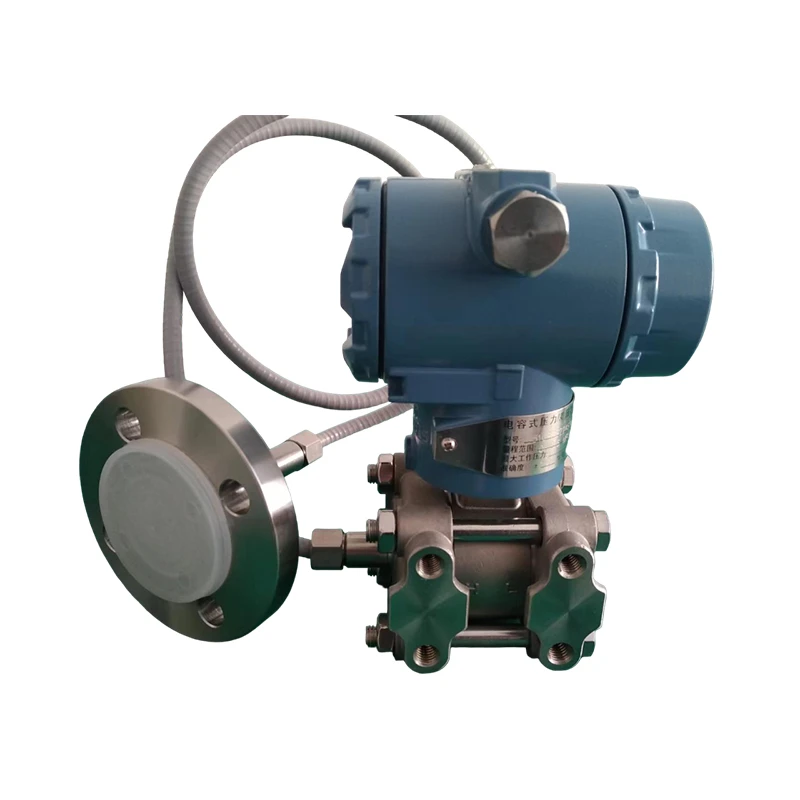

Double Flange Liquid Level Transmitter is another option. It uses two flanges to measure the differential pressure between the top and bottom of the container. This type of transmitter is often used in applications where the liquid has a high viscosity or contains solids.
Single Flange Level Transmitter is similar to the double flange transmitter, but it uses only one flange. It's a simpler and more cost-effective option for applications where the level measurement doesn't require high accuracy.
How We Can Help
As a supplier of level transmitters, we understand that choosing the right transmitter for your application can be a challenge. That's why we offer a wide range of ultrasonic level transmitters, as well as other types of level measurement devices, to meet your specific needs. Our team of experts can help you select the right transmitter, install it correctly, and provide ongoing support and maintenance.
If you're interested in learning more about our level transmitters or have any questions about how they work, please don't hesitate to contact us. We're here to help you find the best solution for your level measurement needs.
References
- "Ultrasonic Level Measurement" by Emerson Automation Solutions
- "Level Measurement Principles" by Siemens AG
- "Industrial Level Measurement" by Endress+Hauser AG