

Level transmitters are essential instruments in various industries, used to measure the level of liquids, slurries, and granular materials in tanks, vessels, and other containers. As a leading level transmitter supplier, we understand the importance of providing accurate and reliable level measurement solutions to our customers. In this blog post, we will explore the different types of level transmitters available in the market, their working principles, applications, and advantages.
Hydrostatic Level Transmitters
Hydrostatic level transmitters operate on the principle that the pressure exerted by a liquid column is directly proportional to its height. These transmitters typically consist of a pressure sensor that is submerged in the liquid or mounted at the bottom of the tank. The pressure sensor measures the hydrostatic pressure, which is then converted into an electrical signal proportional to the liquid level.
One of the key advantages of hydrostatic level transmitters is their simplicity and reliability. They are suitable for a wide range of applications, including water treatment plants, chemical processing, and food and beverage industries. However, they may be affected by changes in density, temperature, and atmospheric pressure, which can introduce errors in the level measurement.
Pressure Level Transmitter
A Pressure Level Transmitter is a type of hydrostatic level transmitter that measures the pressure at the bottom of a tank to determine the liquid level. These transmitters are commonly used in applications where the liquid is clean and non - corrosive. They are available in different pressure ranges and can be configured for various output signals, such as 4 - 20 mA or digital communication protocols.
Single Flange Level Transmitter
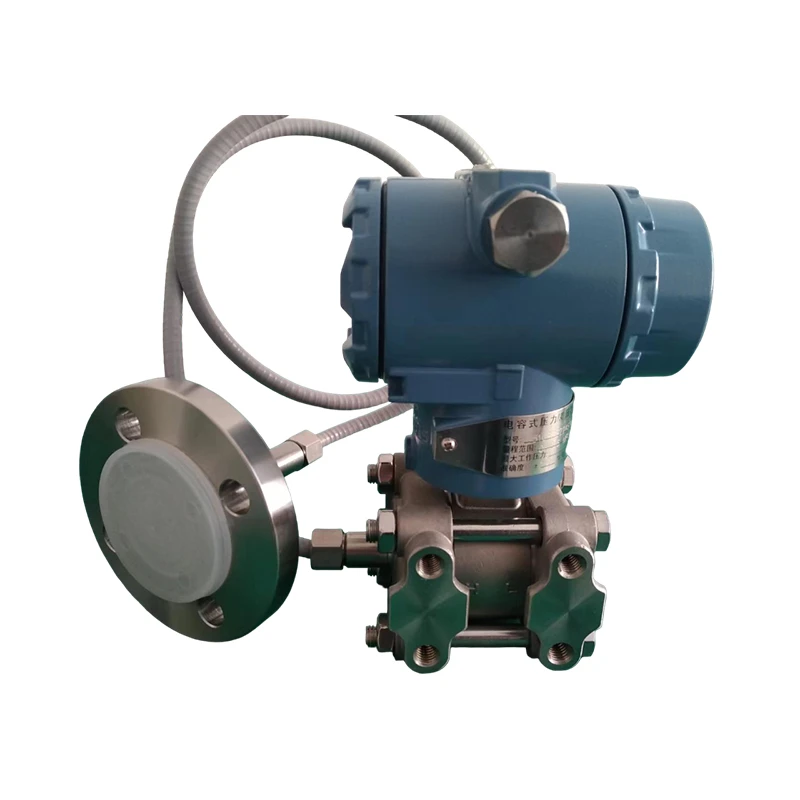
The Single Flange Level Transmitter is designed for applications where the liquid level needs to be measured in a tank with a single connection point. It is typically installed on the side or bottom of the tank and uses a diaphragm to sense the pressure exerted by the liquid. Single flange level transmitters are suitable for measuring the level of liquids in small to medium - sized tanks and are often used in industrial processes, such as chemical storage and wastewater treatment.
Double Flange Liquid Level Transmitter
The Double Flange Liquid Level Transmitter is used for measuring the level of liquids in tanks with a large height or in applications where the liquid has a high density or viscosity. It consists of two flanges, one mounted at the bottom of the tank and the other at the top. The pressure difference between the two flanges is measured to determine the liquid level. Double flange level transmitters are commonly used in the oil and gas industry, as well as in large - scale chemical and petrochemical plants.
Ultrasonic Level Transmitters
Ultrasonic level transmitters use ultrasonic waves to measure the distance between the transmitter and the surface of the liquid. The transmitter emits an ultrasonic pulse, which travels through the air and reflects off the liquid surface. The time taken for the pulse to return to the transmitter is measured, and the distance is calculated based on the speed of sound in air.
One of the main advantages of ultrasonic level transmitters is their non - contact measurement method, which makes them suitable for measuring the level of corrosive, viscous, or dirty liquids. They are also easy to install and maintain. However, they can be affected by factors such as temperature, humidity, and the presence of foam or vapor above the liquid surface, which can cause errors in the measurement.
Radar Level Transmitters
Radar level transmitters use microwave radar technology to measure the level of liquids or solids in a tank. The transmitter emits a radar signal, which travels towards the surface of the material and reflects back. The time taken for the signal to return is measured, and the distance is calculated based on the speed of light.
Radar level transmitters offer high accuracy and reliability, even in challenging environments. They are not affected by factors such as temperature, pressure, humidity, or the presence of foam or vapor. They can be used for measuring the level of a wide range of materials, including liquids, slurries, and granular solids. However, they are relatively more expensive than other types of level transmitters.
Capacitance Level Transmitters
Capacitance level transmitters work on the principle that the capacitance between two electrodes changes when the level of a dielectric material (such as a liquid or a solid) between them changes. The transmitter measures the capacitance and converts it into a level measurement.
Capacitance level transmitters are suitable for measuring the level of both conductive and non - conductive liquids and solids. They are often used in applications where the material has a low dielectric constant or in applications where the level needs to be measured in a small space. They are relatively inexpensive and easy to install, but they can be affected by changes in the dielectric properties of the material, such as temperature and composition.
Float - Type Level Transmitters
Float - type level transmitters use a float that rises and falls with the liquid level. The movement of the float is mechanically linked to a sensor, which converts the position of the float into an electrical signal proportional to the liquid level.
Float - type level transmitters are simple and reliable, and they are commonly used in applications where a low - cost and straightforward level measurement solution is required. They are suitable for measuring the level of clean and non - corrosive liquids in small to medium - sized tanks. However, they may not be suitable for applications where the liquid has a high viscosity or contains solids, as the float may get stuck or damaged.
Optical Level Transmitters
Optical level transmitters use light to detect the presence or absence of a liquid at a specific point. There are two main types of optical level transmitters: through - beam and reflective. In a through - beam optical level transmitter, a light source and a receiver are placed on opposite sides of the tank. When the liquid level rises and blocks the light beam, the receiver detects a change in the light intensity, indicating the presence of the liquid. In a reflective optical level transmitter, the light source and the receiver are located on the same side of the tank. The light is reflected off the liquid surface, and the receiver detects the reflected light.
Optical level transmitters are fast - responding and can be used for point - level detection in a variety of applications. They are suitable for measuring the level of clear or translucent liquids and are often used in the food and beverage industry, as well as in pharmaceutical and semiconductor manufacturing.
Choosing the Right Level Transmitter
When choosing a level transmitter, several factors need to be considered, including the type of material to be measured, the accuracy requirements, the environmental conditions, and the cost. For example, if you need to measure the level of a corrosive liquid, a non - contact measurement method such as ultrasonic or radar may be more suitable. If accuracy is critical, a radar or hydrostatic level transmitter may be the best choice.
As a level transmitter supplier, we offer a wide range of level transmitters to meet the diverse needs of our customers. Our team of experts can help you select the right level transmitter for your specific application, ensuring accurate and reliable level measurement.
If you are looking for a high - quality level transmitter for your industrial process, we invite you to contact us for more information. Our experienced sales team will be happy to discuss your requirements and provide you with a customized solution. Whether you need a simple float - type level transmitter or a sophisticated radar level transmitter, we have the expertise and the products to meet your needs.

References
- "Level Measurement Handbook," by John W. Vogel
- "Instrumentation and Control Systems," by William Bolton
- Manufacturer's datasheets for various level transmitters