

Radar level gauges are widely recognized for their accuracy, reliability, and non-contact measurement capabilities. They are commonly used in various industries, including oil and gas, chemical, and food and beverage, to measure the level of liquids and solids in tanks and vessels. However, like any technology, radar level gauges have their disadvantages. As a level gauge supplier, it's important for me to be transparent about these limitations so that customers can make informed decisions when choosing the right level measurement solution for their applications.
1. High Initial Cost
One of the most significant disadvantages of radar level gauges is their high initial cost. Compared to other types of level gauges, such as ultrasonic or float level gauges, radar level gauges are generally more expensive. This is due to the complex technology involved in their design and manufacturing. Radar level gauges use microwave signals to measure the distance between the gauge and the surface of the material being measured. The equipment required to generate, transmit, and receive these microwave signals is sophisticated and costly. For small-scale operations or applications with a limited budget, the high upfront investment in a radar level gauge may not be feasible.
2. Installation Complexity
Installing a radar level gauge can be a complex process that requires specialized knowledge and skills. Unlike some simpler level gauges that can be easily installed by in-house maintenance teams, radar level gauges often need to be installed by trained professionals. The installation process involves proper alignment of the gauge to ensure accurate measurement. Incorrect alignment can lead to inaccurate readings and may even cause the gauge to malfunction. Additionally, the environment in which the gauge is installed needs to be carefully considered. Factors such as temperature, pressure, and the presence of dust or vapors can affect the performance of the radar level gauge. For example, in a dusty environment, the dust particles can scatter the microwave signals, leading to measurement errors.
3. Maintenance Requirements
Radar level gauges require regular maintenance to ensure optimal performance. Over time, the internal components of the gauge can wear out, and the antenna may become dirty or damaged. Regular calibration is also necessary to maintain the accuracy of the measurements. Maintenance tasks can be time-consuming and may require the use of specialized tools and equipment. In some cases, maintenance may need to be performed by the manufacturer or a certified service provider, which can add to the overall cost of ownership. For industries with high production demands, the downtime required for maintenance can be a significant drawback, as it can disrupt operations and lead to lost productivity.
4. Limited Performance in Certain Conditions
While radar level gauges are generally reliable, their performance can be limited in certain conditions. For example, in applications where the material being measured has a low dielectric constant, the radar signals may not be reflected effectively, making it difficult to obtain accurate measurements. Materials such as certain types of plastics or foams can pose challenges for radar level gauges. Additionally, in applications with a lot of turbulence or agitation in the liquid or solid, the surface of the material may be uneven, which can cause the radar signals to be scattered and result in inaccurate readings. In these situations, alternative level measurement technologies may be more suitable.
5. Susceptibility to Interference
Radar level gauges are susceptible to interference from other electronic devices or signals. In industrial settings, there are often many electronic devices operating in close proximity, such as motors, generators, and communication equipment. These devices can generate electromagnetic interference that can disrupt the operation of the radar level gauge. The interference can cause false readings or even prevent the gauge from functioning properly. To mitigate this issue, additional shielding and filtering may be required, which can add to the cost and complexity of the installation.
6. Compatibility Issues
When integrating a radar level gauge into an existing control system, compatibility issues may arise. The gauge may need to communicate with other sensors, controllers, or data acquisition systems. Ensuring that the radar level gauge is compatible with these other components can be a challenge. Different manufacturers may use different communication protocols, which can make it difficult to integrate the gauge seamlessly into the existing system. This may require additional software or hardware modifications, which can increase the cost and complexity of the project.
Alternative Level Gauge Options
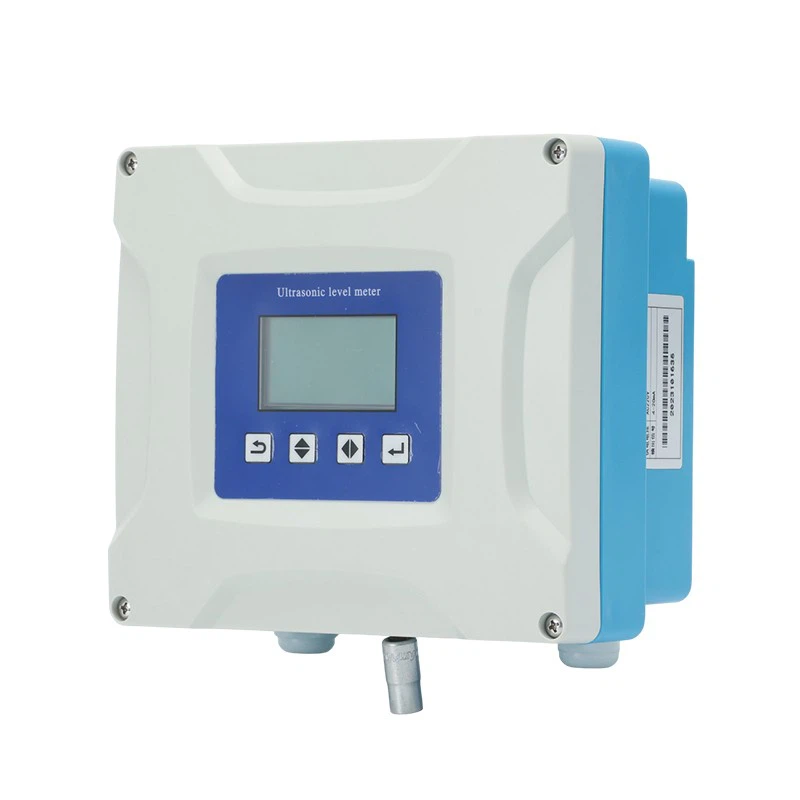
As a level gauge supplier, I understand that the disadvantages of radar level gauges may not make them the best choice for every application. That's why we offer a range of alternative level gauge products that may be more suitable in certain situations. For example, our High Qyality 4-20mA Ultrosonic Level Difference Gauge is a cost-effective option for many applications. It uses ultrasonic waves to measure the level of liquids and solids, and it is relatively easy to install and maintain. Another option is our Split Ultrasonic Liquid Level Meter, which offers flexibility in installation and can be used in a variety of environments. For applications where flow measurement is also required, our DSP sensor flowmeter provides accurate flow measurement in addition to level measurement.

Conclusion
In conclusion, while radar level gauges offer many advantages, such as high accuracy and non-contact measurement, they also have several disadvantages that need to be considered. The high initial cost, installation complexity, maintenance requirements, limited performance in certain conditions, susceptibility to interference, and compatibility issues can make them less suitable for some applications. As a level gauge supplier, we are committed to providing our customers with the best level measurement solutions for their specific needs. Whether it's a radar level gauge or an alternative product, we can help you choose the right equipment based on your application requirements, budget, and operational constraints. If you are interested in learning more about our level gauge products or have any questions about level measurement, please feel free to contact us for a detailed consultation and to discuss your procurement needs.
References
- Beck, M. S. (2010). Industrial level measurement: Principles and practice. Elsevier.
- Kutz, M. (2012). Handbook of level measurement. McGraw-Hill.
- Patranabis, D. C. (2013). Process instrumentation and control handbook. CRC Press.