

Accuracy of Open Channel Flow Meters in Low - Flow Conditions
As a supplier of open channel flow meters, I've witnessed firsthand the diverse applications and challenges associated with measuring water flow in open channels. One of the most critical aspects that often comes under scrutiny is the accuracy of these flow meters, especially in low - flow conditions. In this blog, we'll delve into the factors affecting the accuracy of open channel flow meters in low - flow scenarios, explore different types of flow meters and their performance, and discuss how to ensure reliable measurements.
Factors Affecting Accuracy in Low - Flow Conditions
Channel Geometry
The shape and dimensions of the open channel play a significant role in the accuracy of flow measurements, particularly at low flows. Irregular channel shapes, such as uneven bottoms or non - standard cross - sections, can cause flow disturbances. These disturbances can lead to inaccurate velocity and depth measurements, which are the two key parameters used to calculate flow rate. For example, in a channel with a lot of debris or sediment buildup, the flow path can be constricted in some areas, creating localized high - velocity zones and low - velocity areas. This non - uniform flow profile makes it difficult for flow meters to accurately measure the average velocity across the channel.
Fluid Properties
The properties of the fluid flowing through the open channel also impact the accuracy of flow meters. At low flows, the viscosity of the fluid becomes more important. Higher viscosity fluids, such as wastewater with a high concentration of solids, tend to flow more slowly and can adhere to the channel walls. This can cause a thin layer of fluid to move at a much slower velocity near the walls compared to the center of the channel. Flow meters that rely on point - velocity measurements may not accurately capture the overall flow rate due to this non - uniform velocity distribution. Additionally, the presence of air bubbles or foam in the fluid can interfere with the operation of some flow meters, leading to inaccurate readings.
Turbulence and Flow Disturbances
Low - flow conditions are often more susceptible to turbulence and flow disturbances. Small changes in the channel, such as a slight bend or an obstruction, can create eddies and vortices in the flow. These turbulent flow patterns can cause fluctuations in the velocity and depth of the fluid, making it challenging for flow meters to provide stable and accurate measurements. For instance, a small rock in the channel can create a wake downstream, where the flow velocity and direction change rapidly. Flow meters that are sensitive to these changes may produce inconsistent readings.
Types of Open Channel Flow Meters and Their Performance in Low - Flow Conditions
Ultrasonic Flow Meters
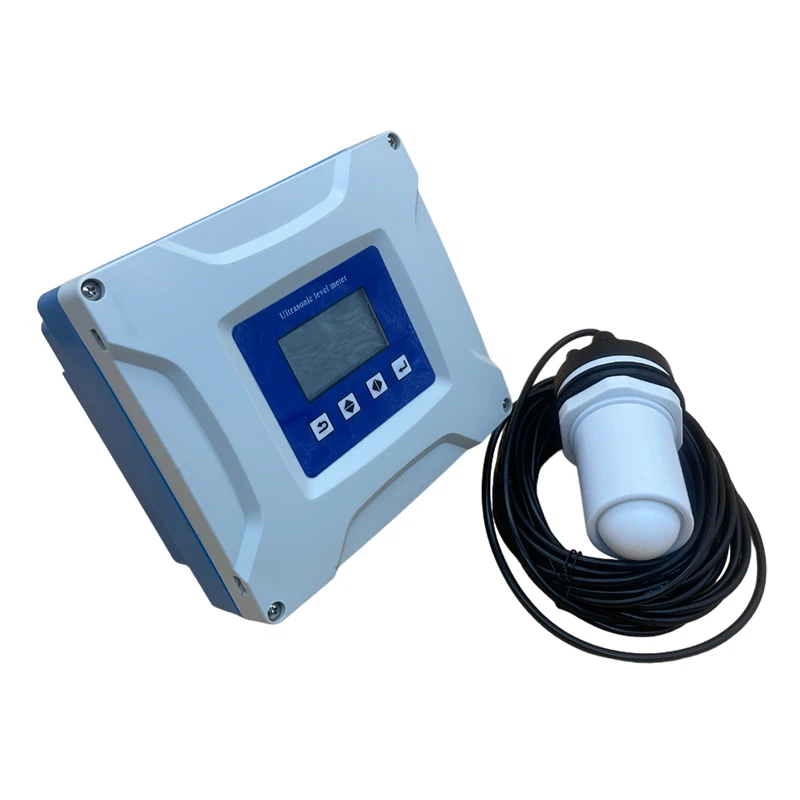
Ultrasonic open channel flow meters work by measuring the time it takes for ultrasonic waves to travel between transducers placed in the channel. These meters can measure both the velocity of the fluid and the depth of the water. In low - flow conditions, ultrasonic flow meters can be quite accurate if the installation is proper. However, they are sensitive to air bubbles and foam in the fluid, which can scatter the ultrasonic waves and cause inaccurate readings. Also, if the flow velocity is very low, the time difference measured by the ultrasonic transducers may be very small, leading to increased measurement uncertainty. For more information about ultrasonic open channel flow meters, you can visit our Open Channel Water Flow Meter page.
Magnetic Flow Meters
Magnetic flow meters operate based on Faraday's law of electromagnetic induction. They measure the voltage induced by the movement of a conductive fluid through a magnetic field. In open channels, magnetic flow meters are less commonly used but can be effective in low - flow conditions, especially for conductive fluids such as wastewater. One of the advantages of magnetic flow meters is that they are not affected by the presence of air bubbles or foam. However, they require a minimum flow velocity to generate a measurable voltage, and in extremely low - flow situations, the signal may be too weak to provide accurate measurements.

Float - Type Flow Meters
Float - type flow meters use a float that rises and falls with the water level in the channel. The position of the float is related to the flow rate. In low - flow conditions, float - type flow meters can be relatively simple and cost - effective. However, they are highly dependent on the stability of the water level and can be affected by waves and fluctuations in the channel. Also, the accuracy of float - type flow meters may be limited due to the mechanical nature of the device, such as friction in the float mechanism. Our 4 - 20mA - 20~70℃ Open Channel Flowmeter is a high - quality option that combines reliable performance with modern technology.
Doppler Flow Meters
Doppler flow meters measure the flow velocity by detecting the frequency shift of ultrasonic waves reflected from particles or bubbles in the fluid. In low - flow conditions, the number of particles or bubbles available for reflection may be limited, which can reduce the accuracy of the measurement. Additionally, if the particles are too small or the fluid is very clear, the Doppler effect may be weak, making it difficult to obtain accurate velocity readings. Our Open Channel (babbitt) Flowmeter offers advanced Doppler technology designed to improve performance in various flow conditions.
Ensuring Accurate Measurements in Low - Flow Conditions
Proper Installation
The installation of open channel flow meters is crucial for accurate measurements, especially in low - flow conditions. The flow meter should be installed in a straight section of the channel, away from any bends, obstructions, or inlets. This helps to ensure a more uniform flow profile and reduces the influence of flow disturbances. The sensors should be properly calibrated and positioned at the correct depth and location in the channel. For example, ultrasonic transducers should be installed at a height that allows for clear transmission and reception of the ultrasonic waves without interference from the channel walls or the water surface.
Regular Maintenance
Regular maintenance is essential to keep open channel flow meters operating accurately in low - flow conditions. This includes cleaning the sensors to remove any debris, sediment, or biological growth that may accumulate over time. Debris on the sensors can interfere with the measurement process and lead to inaccurate readings. Additionally, the calibration of the flow meter should be checked and adjusted periodically to ensure that it is still providing accurate measurements. This may involve comparing the readings of the flow meter with a known reference flow or using calibration equipment.
Data Analysis and Compensation
In low - flow conditions, the data obtained from open channel flow meters may be subject to more noise and uncertainty. Advanced data analysis techniques can be used to filter out the noise and improve the accuracy of the measurements. For example, averaging the readings over a certain period of time can reduce the impact of short - term fluctuations. Compensation algorithms can also be applied to correct for known sources of error, such as the effect of temperature on the fluid properties or the influence of the channel geometry.
Conclusion
The accuracy of open channel flow meters in low - flow conditions is affected by a variety of factors, including channel geometry, fluid properties, and flow disturbances. Different types of flow meters have their own advantages and limitations in these conditions. By understanding these factors and taking appropriate measures, such as proper installation, regular maintenance, and advanced data analysis, it is possible to obtain reliable and accurate flow measurements.
If you are in need of high - quality open channel flow meters for your low - flow applications, we are here to help. Our team of experts can assist you in selecting the most suitable flow meter for your specific requirements and ensure that it is installed and maintained correctly. Contact us to start a procurement discussion and find the best solution for your flow measurement needs.
References
- ASCE Task Committee on Standardization of Open - Channel Flow Measurement. "Measurement of Open - Channel Flow." Journal of Hydraulic Engineering, ASCE, Vol. 114, No. 8, 1988.
- ISO 748:2007. "Measurement of liquid flow in open channels - Velocity - area methods." International Organization for Standardization.
- Chow, Ven Te. "Open - Channel Hydraulics." McGraw - Hill, New York, 1959.