

As a supplier of electromagnetic flowmeters, I've witnessed firsthand the critical role these devices play in various industries, from water treatment to chemical processing. One of the most common questions I encounter is about the effect of fluid impurities on an electromagnetic flowmeter's accuracy. In this blog, I'll delve into this topic, exploring how different types of impurities can impact the performance of these flowmeters and what steps can be taken to mitigate these effects.
Understanding Electromagnetic Flowmeters
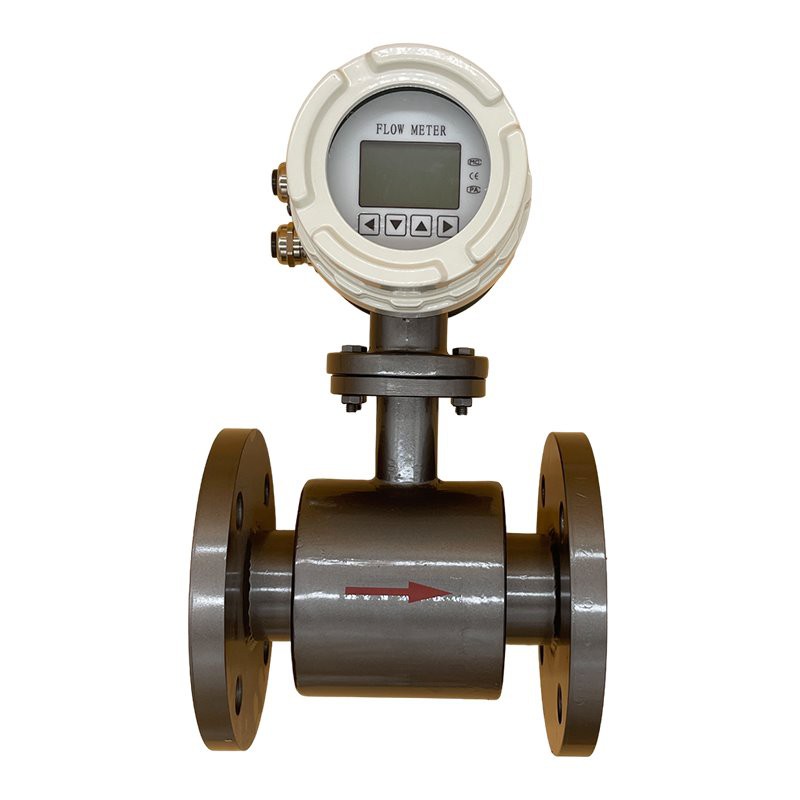
Before we discuss the impact of fluid impurities, it's essential to understand how electromagnetic flowmeters work. These devices operate on the principle of Faraday's law of electromagnetic induction. When a conductive fluid flows through a magnetic field generated by the flowmeter, a voltage is induced across the fluid. This voltage is proportional to the flow velocity of the fluid, allowing the flowmeter to measure the volumetric flow rate accurately.
The accuracy of an electromagnetic flowmeter depends on several factors, including the conductivity of the fluid, the strength of the magnetic field, and the design of the flowmeter itself. However, fluid impurities can significantly affect these factors, leading to inaccurate flow measurements.
Types of Fluid Impurities and Their Effects
1. Particulate Matter
Particulate matter, such as sand, silt, or rust, can be present in many industrial fluids. When these particles flow through an electromagnetic flowmeter, they can cause several problems. Firstly, they can physically damage the electrodes of the flowmeter. The electrodes are in direct contact with the fluid and are responsible for detecting the induced voltage. Abrasive particles can scratch or erode the electrodes, leading to a change in their surface properties and reducing their sensitivity. This can result in inaccurate voltage measurements and, consequently, inaccurate flow readings.
Secondly, particulate matter can cause uneven flow distribution within the flowmeter. The presence of particles can disrupt the laminar flow of the fluid, creating turbulence. Turbulent flow can lead to variations in the induced voltage across the fluid, making it difficult for the flowmeter to accurately measure the average flow velocity. This can cause fluctuations in the flow readings and reduce the overall accuracy of the flowmeter.
2. Air Bubbles
Air bubbles are another common type of impurity in industrial fluids. When air bubbles are present in the fluid flowing through an electromagnetic flowmeter, they can have a significant impact on the flow measurement. Air is a non - conductive medium, and when bubbles pass through the magnetic field, they can disrupt the electrical conductivity of the fluid. This can cause a sudden drop in the induced voltage, leading to inaccurate flow readings.
Moreover, air bubbles can also cause problems with the flowmeter's signal processing. The flowmeter's electronics are designed to process the induced voltage signal based on the assumption that the fluid is a homogeneous conductive medium. The presence of air bubbles can introduce noise into the signal, making it difficult for the electronics to accurately interpret the signal and calculate the flow rate.
3. Chemical Contaminants
Chemical contaminants, such as acids, bases, or salts, can also affect the accuracy of an electromagnetic flowmeter. These contaminants can change the electrical conductivity of the fluid. If the conductivity of the fluid deviates from the range for which the flowmeter is calibrated, the flowmeter may not be able to accurately measure the flow rate.
For example, if a fluid contains a high concentration of salts, its conductivity may increase significantly. This can cause the induced voltage to be higher than expected, leading to an overestimation of the flow rate. On the other hand, if a fluid is contaminated with a substance that reduces its conductivity, the induced voltage may be lower than expected, resulting in an underestimation of the flow rate.
Mitigating the Effects of Fluid Impurities
1. Filtration
One of the most effective ways to reduce the impact of particulate matter on an electromagnetic flowmeter is to use filtration. Installing a filter upstream of the flowmeter can remove large particles from the fluid before it enters the flowmeter. This can prevent physical damage to the electrodes and reduce the likelihood of turbulent flow caused by particulate matter.

There are various types of filters available, such as mesh filters, cartridge filters, and bag filters. The choice of filter depends on the size and concentration of the particles in the fluid, as well as the flow rate of the fluid.
2. Degassing
To address the issue of air bubbles, degassing can be used. Degassing systems can remove air bubbles from the fluid before it enters the flowmeter. There are several methods of degassing, including mechanical degassing, vacuum degassing, and chemical degassing.
Mechanical degassing involves using devices such as centrifuges or separators to separate the air bubbles from the fluid. Vacuum degassing uses a vacuum to reduce the pressure in the fluid, causing the air bubbles to expand and rise to the surface, where they can be removed. Chemical degassing involves adding chemicals to the fluid that react with the dissolved air and release it as a gas.
3. Conductivity Monitoring and Calibration
To account for the effects of chemical contaminants on the fluid conductivity, it's important to monitor the conductivity of the fluid regularly. Many modern electromagnetic flowmeters are equipped with conductivity sensors that can measure the conductivity of the fluid in real - time. By monitoring the conductivity, the flowmeter can adjust its measurement algorithm to compensate for any changes in conductivity.
In addition, regular calibration of the flowmeter is essential. Calibration ensures that the flowmeter is accurately measuring the flow rate based on the actual conductivity of the fluid. It's recommended to calibrate the flowmeter at least once a year or more frequently if the fluid composition is likely to change.
Our Electromagnetic Flowmeters and Their Resistance to Impurities
At our company, we understand the challenges posed by fluid impurities, and we've designed our electromagnetic flowmeters to be as resistant as possible. For example, our Insertion Type Magnetic Flow Meter features robust electrodes that are made from high - quality materials. These electrodes are resistant to abrasion and corrosion, reducing the risk of damage from particulate matter and chemical contaminants.
Our Flowmeter Electromagnetic is designed with a special flow tube geometry that helps to minimize the impact of air bubbles and particulate matter on the flow measurement. The flow tube is designed to promote laminar flow, reducing the likelihood of turbulence caused by impurities.
In addition, our Adept Electromagnetic Flow Meter is equipped with advanced signal processing technology. This technology can filter out noise caused by air bubbles and other impurities, ensuring accurate flow measurements even in challenging fluid conditions.
Conclusion
Fluid impurities can have a significant impact on the accuracy of an electromagnetic flowmeter. Particulate matter, air bubbles, and chemical contaminants can all cause problems such as electrode damage, uneven flow distribution, and changes in fluid conductivity. However, by understanding the types of impurities and their effects, and by taking appropriate mitigation measures such as filtration, degassing, and conductivity monitoring, it's possible to minimize these impacts and ensure accurate flow measurements.
At our company, we're committed to providing high - quality electromagnetic flowmeters that are reliable and accurate, even in the presence of fluid impurities. If you're looking for an electromagnetic flowmeter for your industrial application, we'd be happy to discuss your specific needs and help you choose the right flowmeter for your requirements. Contact us today to start a conversation about your flow measurement needs.
References
- "Electromagnetic Flowmeters: Principles, Operation, and Applications" by Flow Research.
- "Industrial Flow Measurement Handbook" by John P. Millington.
- "Flow Measurement Technology" by the Instrumentation, Systems, and Automation Society (ISA).