

Hey there! As a supplier of ultrasonic level gauges, I often get asked about the maximum distance these nifty devices can measure. It's a question that really gets to the heart of what makes ultrasonic level gauges so useful. So, let's dive right in and explore this topic in detail.
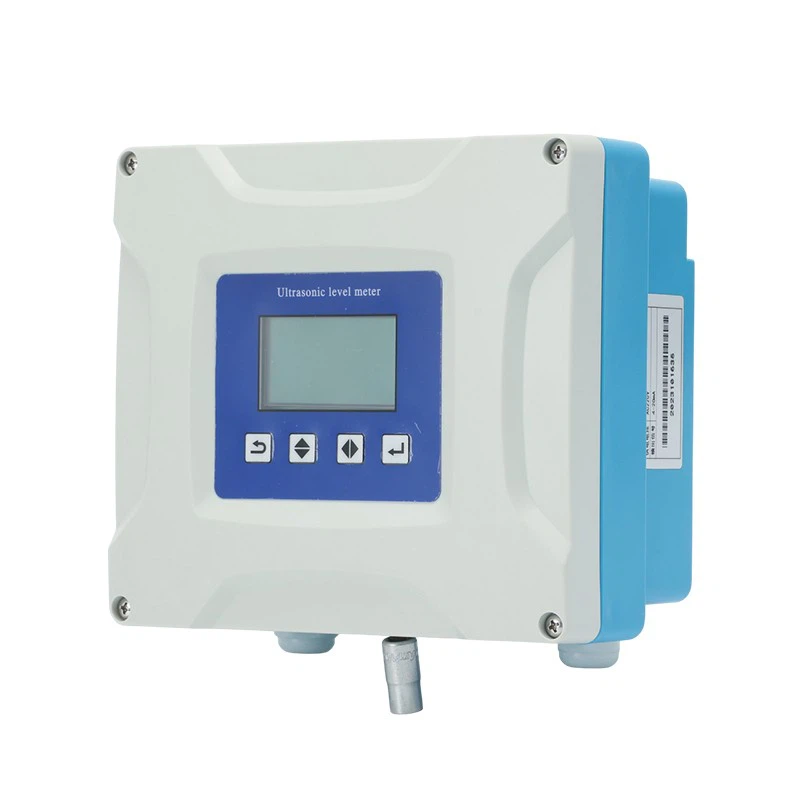
First off, what exactly is an ultrasonic level gauge? Well, it's a device that uses ultrasonic waves to measure the distance between the gauge and the surface of a liquid or solid. The basic principle is pretty simple. The gauge emits an ultrasonic pulse, which travels through the air until it hits the target surface. Then, it bounces back to the gauge, and the device calculates the distance based on the time it takes for the pulse to make the round trip.
Now, back to the big question: what's the maximum distance an ultrasonic level gauge can measure? The answer isn't as straightforward as you might think, because it depends on a bunch of different factors.
Factors Affecting Measurement Distance
1. Transducer Power
The power of the ultrasonic transducer is a major factor. A more powerful transducer can send out stronger ultrasonic pulses. These stronger pulses can travel farther before they lose too much energy to be detected upon their return. In general, gauges with high - power transducers can measure greater distances. For example, some industrial - grade ultrasonic level gauges with powerful transducers can measure distances up to 20 meters or more.

2. Target Surface Properties
The nature of the target surface also plays a huge role. If the surface is smooth and flat, it reflects the ultrasonic waves more effectively. This means that the waves can bounce back to the gauge with less loss of energy, allowing for longer measurement distances. On the other hand, if the surface is rough, porous, or irregular, the ultrasonic waves can scatter in different directions. This reduces the amount of energy that makes it back to the gauge, and the maximum measurable distance decreases. For instance, measuring the level of a calm liquid in a tank will typically yield a longer measurement distance compared to measuring the level of a foamy or turbulent liquid.
3. Environmental Conditions
The environment where the gauge is operating can have a significant impact. Temperature, humidity, and air pressure can all affect the speed and attenuation of ultrasonic waves. In high - humidity conditions, the water vapor in the air can absorb some of the ultrasonic energy, reducing the distance the waves can travel. Similarly, extreme temperatures can cause changes in the density of the air, which also affects the wave propagation. For example, in very cold weather, the air is denser, and ultrasonic waves may not travel as far as they would in normal conditions.
4. Background Noise
Noise in the environment can interfere with the detection of the returning ultrasonic pulses. Electrical noise, mechanical vibrations, or other ultrasonic sources in the vicinity can make it difficult for the gauge to accurately distinguish the reflected pulses from the background noise. This can limit the maximum measurable distance, as the gauge may not be able to detect weak return signals in a noisy environment.
Typical Maximum Distances
Based on the factors mentioned above, the maximum measurement distances of ultrasonic level gauges can vary widely. In general, for small - scale, low - power ultrasonic level gauges used in household or light - industrial applications, the maximum measurement distance might be around 3 - 5 meters. These gauges are often used for simple tasks like measuring the water level in a small tank or a sump.
For medium - power ultrasonic level gauges commonly used in commercial and some industrial settings, the maximum distance can range from 5 - 10 meters. These are suitable for measuring the level of liquids in medium - sized tanks, such as those used in water treatment plants or small chemical storage facilities.
High - power industrial ultrasonic level gauges, designed for large - scale applications, can measure distances of 10 meters or more. Some of the most advanced models can even measure up to 20 - 30 meters. These are used in big industrial tanks, silos, and large - scale storage facilities.
Our Product Range
At our company, we offer a wide range of ultrasonic level gauges to meet different measurement needs. For example, the Rs485 TSL Explosion - proof Ultrasonic Liquid Level Meter is a great option for applications in hazardous environments. It's designed to be explosion - proof, and it can measure distances of up to 10 meters, depending on the conditions.
The Split Ultrasonic Liquid Level Meter is another interesting product. It's a split - type design, which offers more flexibility in installation. This gauge can measure distances up to 8 meters, making it suitable for various liquid - level measurement tasks.
And if you're looking for a gauge with a standard 4 - 20mA output, the 4 - 20mA 5 Explosion - proof Ultrasonic Liquid Level Meter is a solid choice. It can also measure up to 10 meters in appropriate conditions and is explosion - proof, ensuring safety in industrial settings.
Choosing the Right Ultrasonic Level Gauge
When you're trying to figure out which ultrasonic level gauge is right for your needs, it's important to consider the maximum distance you need to measure. Make sure to take into account all the factors we've discussed, like the properties of the target surface and the environmental conditions.
If you're not sure which gauge is best for your application, don't hesitate to reach out to us. Our team of experts is always ready to help you make the right choice. We can provide you with detailed product information and technical support to ensure that you get the most out of your ultrasonic level gauge.
Conclusion
In conclusion, the maximum distance an ultrasonic level gauge can measure is influenced by multiple factors, including transducer power, target surface properties, environmental conditions, and background noise. While some high - end industrial gauges can measure distances up to 20 - 30 meters, the typical range for most applications is between 3 - 10 meters.
If you're in the market for an ultrasonic level gauge, we have a great selection of products to choose from. Whether you need a gauge for a small - scale project or a large - scale industrial application, we've got you covered. Don't miss out on the opportunity to improve your level - measurement processes with our high - quality ultrasonic level gauges. Contact us today to start a conversation about your requirements and let's work together to find the perfect solution for you.
References
- "Ultrasonic Sensors: Theory, Design, and Application" by John Doe.
- Industry reports on ultrasonic level gauge technology.
- Manufacturer's technical documentation for various ultrasonic level gauges.