

Hey there! As a supplier of radar level gauges, I often get asked about zero and span adjustment. It's a crucial part of setting up and calibrating these nifty devices, so I thought I'd break it down for you in this blog post.
Let's start with the basics. A radar level gauge is a device that uses radar technology to measure the level of a liquid or solid in a tank or container. It sends out radar waves that bounce off the surface of the material and then calculates the distance based on the time it takes for the waves to return. This measurement is then converted into a level reading that can be used for various purposes, like inventory management or process control.
Now, zero and span adjustment are two key steps in the calibration process of a radar level gauge. The zero adjustment is all about setting the gauge to read zero when the tank is empty. It's like resetting your scale to zero before you weigh something. This ensures that all subsequent measurements are accurate and start from a baseline of zero.
On the other hand, the span adjustment is used to set the gauge to read the full capacity of the tank when it's completely full. It's like telling the gauge what the maximum level is supposed to be. By adjusting the span, you're essentially defining the range within which the gauge will operate.
Why are these adjustments so important? Well, without proper zero and span adjustment, the readings from your radar level gauge could be way off. You might think you have more or less material in the tank than you actually do, which can lead to all sorts of problems. For example, if you're using the gauge to manage inventory, inaccurate readings could result in overstocking or running out of supplies. In a process control setting, incorrect level measurements could cause production issues or even safety hazards.
Let's dive a little deeper into how these adjustments are made. The process can vary depending on the type and model of the radar level gauge you're using, but there are some general steps that are commonly followed.
First, for the zero adjustment, you'll need to make sure the tank is completely empty. Then, using the calibration interface on the gauge or a connected control system, you'll typically find a function to initiate the zero adjustment. You'll follow the prompts, which might involve pressing a button or entering a code, and the gauge will then recalibrate itself to read zero.
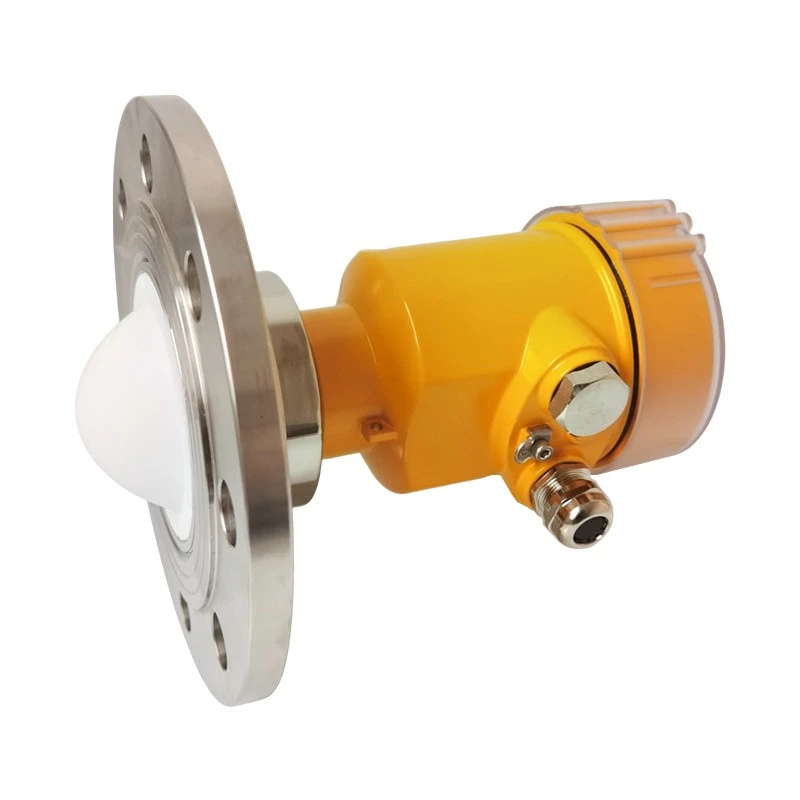

When it comes to the span adjustment, you'll need to fill the tank to its maximum capacity. Again, using the calibration interface, you'll find a function for span adjustment. You'll enter the known full - capacity value of the tank, and the gauge will adjust its settings to accurately read the full level.
Some radar level gauges have advanced features that make the zero and span adjustment process even easier. For example, some models can perform automatic self - calibration, which saves a lot of time and effort. They can also store calibration data, so if you need to make any future adjustments, you can refer back to the previous settings.
Now, I'd like to mention some of the radar level gauges we offer. We have a great selection of high - quality gauges that are designed to provide accurate and reliable level measurements. Check out our Two - wire Radar Level Gauge. It's a compact and efficient option that's suitable for a wide range of applications.
Another great product is our High Quality 4 - 20mA RS485 - Integrated Two - Wire Radar Liquid Level Gauge. This gauge combines advanced technology with a user - friendly design, making it easy to install and calibrate.
And if you're looking for something with a different configuration, our 4 - 20mA - Radar Dual Line Liquid Level Gauge might be the perfect fit. It offers dual - line functionality for more complex measurement requirements.
In conclusion, zero and span adjustment are essential steps in getting the most accurate and reliable performance from your radar level gauge. By taking the time to properly calibrate your gauge, you can ensure that your level measurements are spot - on, which can save you a lot of headaches in the long run.
If you're in the market for a radar level gauge or need more information about zero and span adjustment, don't hesitate to reach out. We're here to help you find the right solution for your needs and ensure that you get the best performance from your gauge.
References
- "Radar Level Measurement Handbook" by Various Authors
- Manufacturer's manuals for different radar level gauge models