

Ultrasonic flow meters have emerged as a popular choice for measuring fluid flow in various industries due to their non-invasive nature, high accuracy, and low maintenance requirements. However, when it comes to measuring the flow of slurries, a common question arises: Can ultrasonic flow meters measure the flow of slurries? As a supplier of ultrasonic flow meters, I'll delve into this topic to provide a comprehensive answer.
Understanding Slurries
Slurries are mixtures of solid particles suspended in a liquid. They are commonly found in industries such as mining, wastewater treatment, food processing, and chemical manufacturing. The characteristics of slurries can vary widely depending on factors such as the size, shape, and concentration of the solid particles, as well as the properties of the liquid medium. These variations can pose significant challenges for flow measurement.
How Ultrasonic Flow Meters Work
Before discussing their suitability for slurries, it's essential to understand how ultrasonic flow meters operate. There are two main types of ultrasonic flow meters: transit-time and Doppler.
Transit - Time Ultrasonic Flow Meters
Transit - time ultrasonic flow meters work by measuring the difference in the time it takes for ultrasonic signals to travel upstream and downstream in the fluid. The flow velocity is then calculated based on this time difference. These meters are highly accurate for clean, homogeneous fluids with low particle content.
Doppler Ultrasonic Flow Meters
Doppler ultrasonic flow meters, on the other hand, rely on the Doppler effect. They emit ultrasonic waves into the fluid, and the waves are reflected off the solid particles or bubbles in the fluid. The frequency shift of the reflected waves is proportional to the flow velocity of the fluid. Doppler meters are typically used for fluids with a relatively high concentration of particles or bubbles.
Challenges of Measuring Slurry Flow
Measuring the flow of slurries presents several challenges for ultrasonic flow meters:
Particle Concentration
High particle concentrations can cause excessive attenuation of the ultrasonic signals. As the particles absorb and scatter the ultrasonic waves, the signal strength reaching the receiver can be significantly reduced, making it difficult to accurately measure the flow.

Particle Size and Shape
Large or irregularly shaped particles can also disrupt the ultrasonic signals. They may cause erratic reflections and scattering, leading to inaccurate flow measurements.
Abrasion
The solid particles in slurries can be abrasive, which may damage the ultrasonic transducers over time. This can affect the performance and longevity of the flow meter.
Can Ultrasonic Flow Meters Measure Slurry Flow?
The answer is yes, but with certain limitations.
Doppler Ultrasonic Flow Meters for Slurries
Doppler ultrasonic flow meters are generally more suitable for measuring slurry flow compared to transit - time meters. Since they rely on the reflection of ultrasonic waves from particles in the fluid, they can work effectively in fluids with a relatively high particle concentration. However, the accuracy of Doppler meters can be affected by factors such as the uniformity of particle distribution and the size of the particles.
Transit - Time Ultrasonic Flow Meters and Slurries
Transit - time ultrasonic flow meters are less suitable for slurries with high particle concentrations. The presence of particles can cause significant signal attenuation and scattering, leading to inaccurate measurements. However, in slurries with very low particle content, transit - time meters may still be able to provide reasonably accurate results.
Our Ultrasonic Flow Meters for Slurry Applications
As a supplier of ultrasonic flow meters, we offer a range of products that can be used for slurry applications.
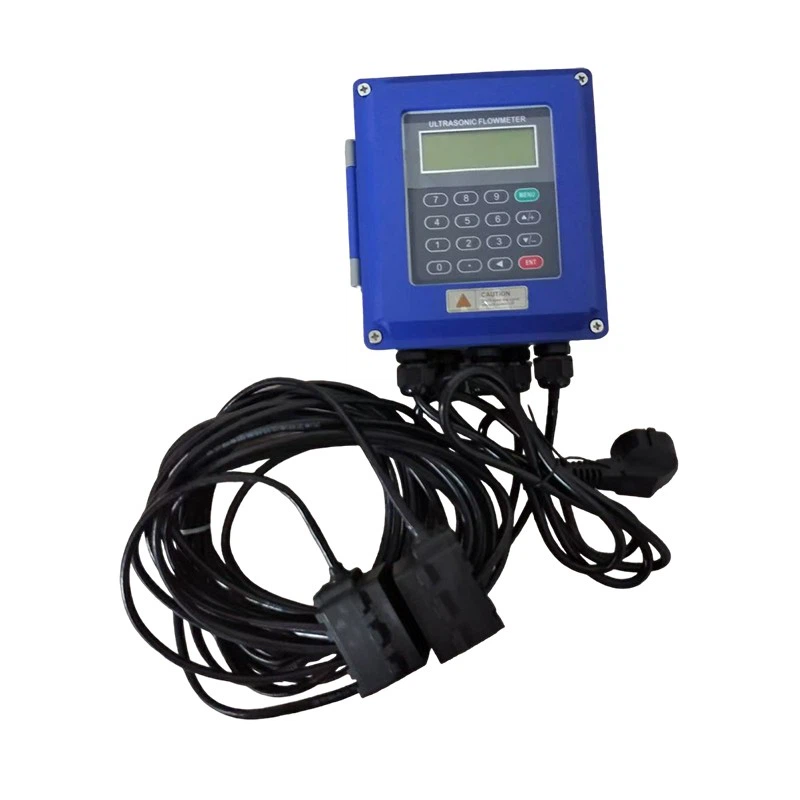
External Ultrasonic Flow Meter
Our External Ultrasonic Flow Meter is a non - invasive solution that can be easily installed on the outside of the pipe. This makes it ideal for applications where the fluid is abrasive or corrosive, such as slurry flow measurement. It can be used with both Doppler and transit - time technology, depending on the specific requirements of the slurry.
Portable Ultrasonic Flow Meter
The Portable Ultrasonic Flow Meter is a versatile option for temporary or spot - checking of slurry flow. It allows for quick and easy measurements without the need for permanent installation. Our portable meters are designed to be rugged and reliable, making them suitable for use in harsh industrial environments.
Fixed Ultrasonic Flow Meter
For continuous and long - term slurry flow measurement, our Fixed Ultrasonic Flow Meter is the ideal choice. These meters are installed directly on the pipe and provide accurate and reliable flow measurements over an extended period. They can be customized to meet the specific needs of different slurry applications.
Considerations for Using Ultrasonic Flow Meters with Slurries
When using ultrasonic flow meters to measure slurry flow, the following considerations should be taken into account:
Calibration
Proper calibration is crucial for accurate flow measurement. Due to the unique characteristics of slurries, it may be necessary to perform on - site calibration to ensure the meter is providing accurate results.
Maintenance
Regular maintenance is essential to keep the flow meter in good working condition. This includes cleaning the transducers, checking the signal strength, and inspecting for any signs of damage.
Installation
Correct installation is also important. The flow meter should be installed in a location where the flow is fully developed and free from turbulence. This can help to improve the accuracy of the measurements.
Conclusion
In conclusion, ultrasonic flow meters can measure the flow of slurries, but the choice of meter depends on the specific characteristics of the slurry. Doppler ultrasonic flow meters are generally more suitable for slurries with high particle concentrations, while transit - time meters may be used for slurries with low particle content. As a supplier of ultrasonic flow meters, we offer a range of products that can be tailored to meet the needs of different slurry applications.
If you are looking for a reliable solution for measuring slurry flow, we invite you to contact us for more information. Our team of experts can help you select the most appropriate ultrasonic flow meter for your specific requirements and provide you with professional advice on installation, calibration, and maintenance.
References
- "Flow Measurement Handbook: Industrial Designs and Applications" by Richard W. Miller.
- "Ultrasonic Flowmeters: Principles and Industrial Applications" by Thomas Scheidl.
- Industry white papers on ultrasonic flow measurement in slurry applications.