

Hey there! As a supplier of vortex flowmeters, I've seen firsthand how crucial accuracy is in these devices. Vortex flowmeters are widely used in various industries to measure the flow rate of liquids, gases, and steam. But what factors can affect their accuracy? Let's dive in and take a closer look.
Fluid Properties
One of the most significant factors that can impact the accuracy of a vortex flowmeter is the properties of the fluid being measured. Different fluids have different densities, viscosities, and conductivities, all of which can influence the meter's performance.
Density
The density of a fluid plays a vital role in determining the frequency of the vortices generated by the flowmeter. In general, denser fluids will produce higher vortex frequencies. If the density of the fluid changes during the measurement process, it can lead to inaccurate readings. For example, in a process where the temperature of the fluid fluctuates, the density will also change accordingly. Our DSP RS485 Sensor Flowmeter is designed to handle a wide range of fluid densities, but it's still important to monitor any significant changes in the fluid's properties.
Viscosity
Viscosity refers to a fluid's resistance to flow. High - viscosity fluids can dampen the formation of vortices, making it more difficult for the flowmeter to accurately detect and measure them. This can result in lower measured flow rates than the actual values. In applications where highly viscous fluids are involved, it might be necessary to select a flowmeter with a design that can better handle these conditions. Our DSP sensor flowmeter has advanced algorithms that can compensate to some extent for the effects of viscosity, but it's essential to understand the limitations.
Conductivity
While conductivity is more relevant for some other types of flowmeters like electromagnetic flowmeters, it can still have an indirect impact on vortex flowmeters. In applications where the fluid has a high conductivity and there are electrical interference sources nearby, it could potentially disrupt the electronic components of the flowmeter, leading to inaccurate readings. It's important to ensure proper grounding and shielding of the flowmeter in such environments.
Installation Conditions
The way a vortex flowmeter is installed can also have a major effect on its accuracy.
Pipe Size and Shape
The diameter and shape of the pipe where the flowmeter is installed matter a great deal. A flowmeter is typically calibrated for a specific pipe size. If the pipe size doesn't match the specifications of the flowmeter, it can cause disturbances in the flow pattern, resulting in inaccurate measurements. For example, if the pipe is too small, the flow velocity might be too high, causing excessive wear on the flowmeter and inaccurate readings. On the other hand, a pipe that is too large can lead to low - velocity flows, making it difficult for the flowmeter to generate and detect vortices.
Upstream and Downstream Straight Pipe Runs
Proper upstream and downstream straight pipe runs are crucial for a vortex flowmeter. Upstream disturbances such as elbows, valves, or reducers can disrupt the flow and create irregularities in the vortex formation. To ensure accurate measurements, it's recommended to have a sufficient length of straight pipe upstream and downstream of the flowmeter. Usually, a minimum of 10 - 20 pipe diameters upstream and 5 pipe diameters downstream is required. Failure to meet these requirements can lead to significant errors in the flow measurement.
Mounting Orientation
The orientation in which the flowmeter is mounted can also affect its accuracy. For liquid applications, the flowmeter should be mounted in a way that ensures the sensor is always in contact with the liquid. Mounting it upside - down in a liquid - filled pipe can cause air pockets to form around the sensor, leading to inaccurate readings. For gas applications, the orientation should be such that any condensate can drain away from the sensor.

Environmental Factors
The environment where the flowmeter operates can introduce several factors that affect accuracy.
Temperature and Pressure
Temperature and pressure changes can impact the fluid properties as well as the physical components of the flowmeter. High temperatures can cause the expansion of the pipe and the flowmeter components, which can alter the flow path and the calibration of the flowmeter. Similarly, pressure changes can affect the density of the fluid. Our Vortex Flow Meter for Steam Application is designed to withstand high - temperature and high - pressure steam environments, but regular monitoring and calibration are still necessary to account for any fluctuations.
Vibration
External vibrations can interfere with the detection of vortices. If the flowmeter is installed in an area with high - level vibrations, such as near a large motor or a compressor, these vibrations can be picked up by the sensor and misinterpreted as vortex signals. This can lead to false readings. It's important to isolate the flowmeter from sources of vibration or use vibration - damping mounts to minimize the impact.
Humidity
High humidity levels can cause corrosion and damage to the electronic components of the flowmeter over time. Moisture can also affect the electrical connections, leading to signal loss or interference. In humid environments, it's important to ensure that the flowmeter is properly sealed and protected.
Maintenance and Calibration
Regular maintenance and calibration are essential for keeping a vortex flowmeter accurate.
Sensor Fouling
Over time, the sensor of the flowmeter can become fouled with debris, scale, or other contaminants from the fluid. This can affect the sensitivity of the sensor and its ability to detect vortices accurately. Regular inspection and cleaning of the sensor are necessary to prevent fouling.
Calibration Drift
Like any measuring device, a vortex flowmeter can experience calibration drift over time. Factors such as wear and tear, changes in the operating environment, and electrical component aging can all contribute to calibration drift. It's recommended to calibrate the flowmeter at regular intervals, depending on the application and the manufacturer's guidelines.
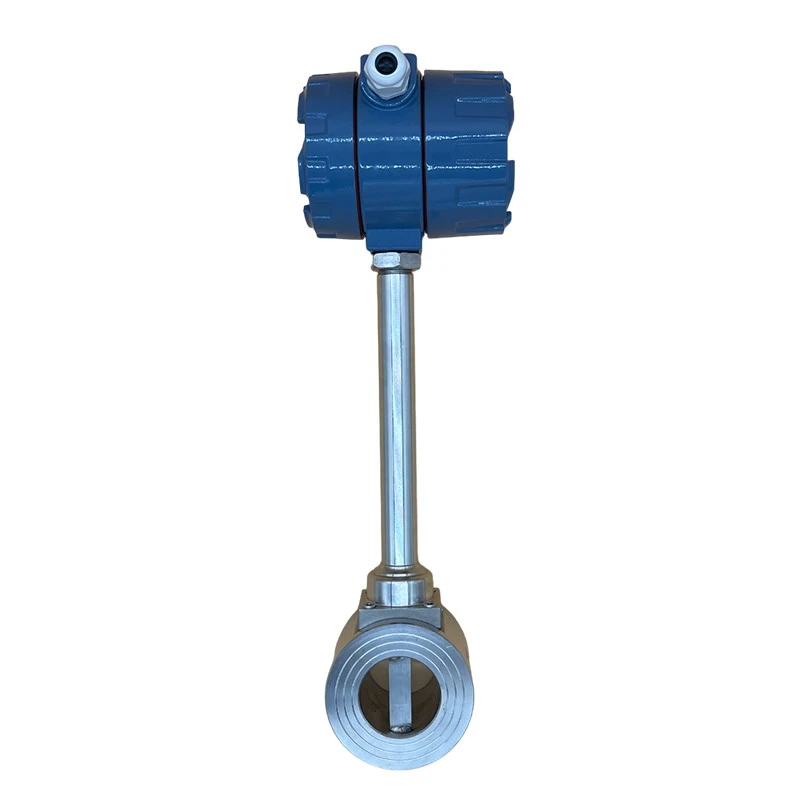
In conclusion, there are several factors that can affect the accuracy of a vortex flowmeter, including fluid properties, installation conditions, environmental factors, and maintenance and calibration. As a supplier, we strive to provide high - quality flowmeters like our DSP RS485 Sensor Flowmeter, DSP sensor flowmeter, and Vortex Flow Meter for Steam Application that are designed to minimize the impact of these factors. However, it's important for users to be aware of these potential issues and take appropriate measures to ensure accurate and reliable flow measurements.
If you're in the market for a vortex flowmeter or need help with improving the accuracy of your existing flow measurement system, don't hesitate to contact us for a detailed discussion. We're here to assist you in finding the best solution for your specific needs.
References
- Flow Measurement Handbook: Principles and Practice of Flow Measurement, Richard W. Miller
- Industrial Flow Measurement, A. R. C. Kennedy